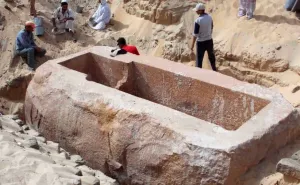
Recent discussions have explored whether ancient civilizations such as the Egyptians, Sumerians, and others possessed advanced technology enabling them to construct monumental structures and manipulate enormous stone blocks. Sites like the Great Pyramid of Giza, Baalbek in Lebanon, and Ollantaytambo in Peru feature massive stones weighing hundreds of tons that ancient builders transported and precisely shaped. Theories propose that these feats might have involved electricity, power tools, and energy sources far ahead of their time. Some suggest that remnants such as the so-called "Baghdad Batteries," the Dendera Light relief, and chemical residues in the Great Pyramid support the notion that ancient peoples harnessed electrical energy.
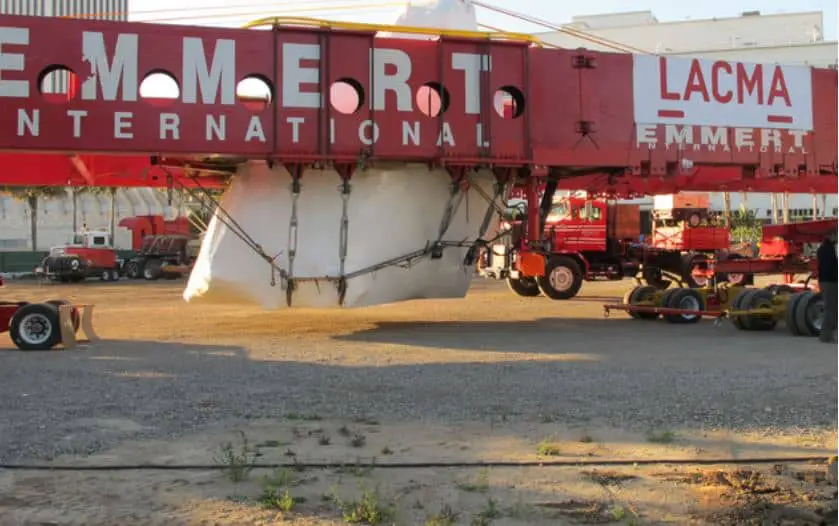
Key details include the observation that moving and carving multi-ton stones would strain the limits of simple tools and manual labor, especially without known ancient machines like pulleys or the wheel. Modern examples, like the 680,000-pound "Levitated Mass" monolith moved in 2012 using advanced cranes and vehicles, highlight the challenges involved; ancient stones often surpassed this weight multiple times. Some research hypothesizes that structures such as the Great Pyramid functioned as energy converters or hydraulic pulse generators using water from the Nile and mineral compounds, potentially producing microwave energy. Furthermore, the prevalence of quartz crystals in granite blocks and obelisks aligns with the concept of piezoelectricity, transmitting energy via Earth's vibrations. These ideas parallel Nikola Tesla’s early 20th-century wireless energy experiments, raising questions about whether similar principles were known millennia ago.
While mainstream archaeology attributes ancient construction achievements to human ingenuity employing simple tools and large-scale labor, the complexity and precision observed continue to intrigue researchers. Evidence of ancient galvanic cells and chemical residues fuels debate over prehistoric electrical knowledge. Worldwide, many ancient cultures harnessed natural resources and materials, demonstrating sophisticated understanding of geometry, material science, and possibly physics. The study of these technologies, real or theoretical, informs broader inquiries into human innovation and the origins of scientific knowledge. Such explorations remind us that humanity’s inventive capacity may extend far further into the past than once assumed.
Source: Ancient Code