
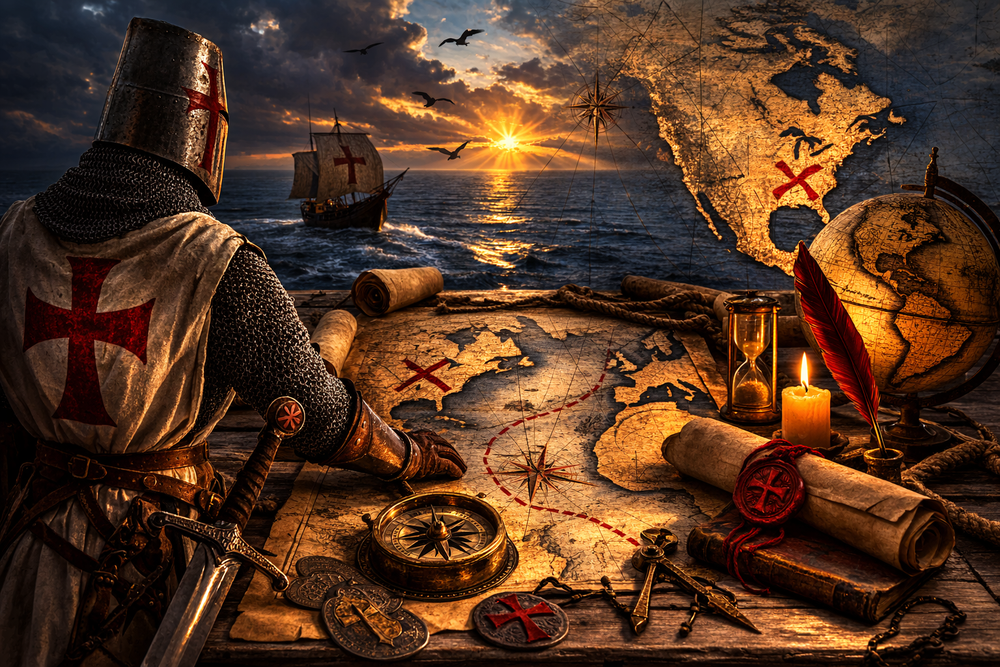
From Rosslyn Chapel to Atlantic maps, the case grows stronger
The Knights Templar and the Origins of Their Mystery
Few medieval organisations have generated as much fascination as the Knights Templar. Founded in the early twelfth century, shortly after the First Crusade, the order began as a small brotherhood of warrior-monks tasked with protecting Christian pilgrims travelling to Jerusalem. They took vows of poverty, chastity, and obedience, and were granted quarters on the Temple Mount, near what was believed to be the remains of Solomon’s Temple.
The Templars in the Holy Land
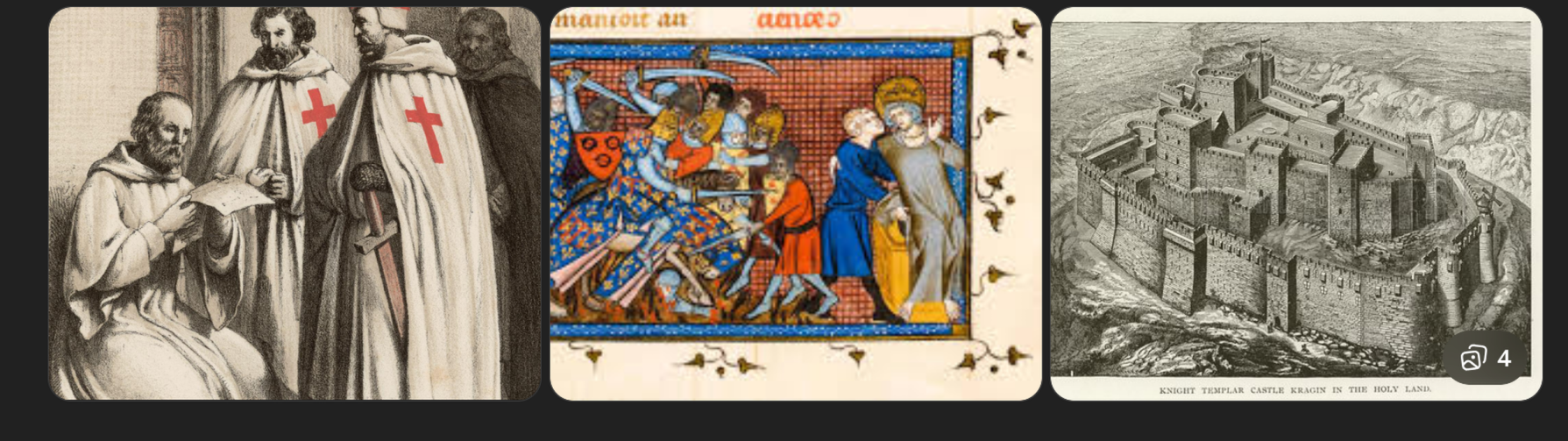
From the beginning, their position placed them at the centre of power, religion, and legend. Jerusalem was not simply a strategic city; it was a site layered with sacred history. Because the Templars were stationed there for nearly two centuries, later generations speculated about what they might have encountered beneath its stones. Stories developed that they had uncovered relics, ancient texts, or lost knowledge connected to the Ark of the Covenant, the Holy Grail, or the Spear of Longinus. There is no firm evidence that they discovered such objects. Yet the persistence of these traditions reveals something important: the Templars were remembered not only as soldiers, but as custodians of secrets.
Over the twelfth and thirteenth centuries, the order expanded rapidly. They built fortified strongholds across the Holy Land and Europe, established one of the earliest international banking systems, and accumulated massive wealth. They answered directly to the Pope rather than to local rulers, which granted them unusual independence in a fragmented medieval world. By the early fourteenth century, they had become one of the most powerful institutions in Christendom.
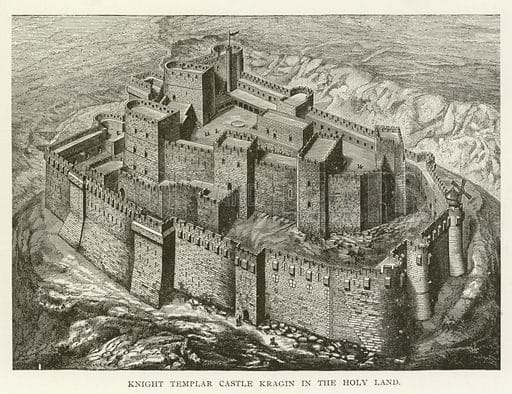
Their downfall, when it came in 1307, was sudden and complete. Within months, the order that had operated across Europe for nearly two centuries had been systematically dismantled and many of their members, including their Grand Master had been arrested and executed. By 1314 - the order had ceased to exist, yet the abruptness of its collapse, combined with the scale of its former power, ensured that questions would linger long after the fires had burned out.
In the centuries that followed, history and myth gradually blended together around the Knights Templar, to the point where separating documented fact from later tradition is almost impossible. They have been associated with hidden treasure, sacred relics, secret societies, and esoteric knowledge. Some of these claims are clearly exaggerated. Others remain difficult to resolve with certainty.
Among the many questions which surround the order, one continues to provoke serious discussion, which if true - promises to shatter the paradigm of our understanding history and the colonisation of the Americas. Did the Templars survive in some form after 1307 and did they 'discover' the Americas nearly a century before Christopher Columbus?
The Arrests of 1307 and the Question of the Missing Assets
By 1307, King Philip IV of France was deeply indebted to the Knights Templar. The order functioned not only as a military brotherhood but as a financial institution operating across multiple kingdoms. Kings borrowed from them. Nobles entrusted them with wealth. They answered directly to the Pope rather than to local rulers, which placed them beyond ordinary royal authority.
From Philip’s perspective, the Templars had become a state within a state. Their independence, wealth, and international network made them difficult to control. At a time when monarchies were consolidating power, such autonomy was increasingly intolerable.
On Friday 13 October 1307( a date marked as unlucky to this day) , Philip ordered the simultaneous arrest of Templars throughout France. The operation was carefully planned. Royal officials moved quickly to detain members and seize property. Pope Clement V, who was already under political pressure from the French crown, gave tacit approval to the proceedings.
Those arrested were accused of heresy, idol worship, blasphemy, and secret initiation rituals. Many were subjected to severe torture. Confessions were extracted under duress. These confessions later formed the basis for dissolving the order.
However, the arrests were not universal. They were strongest in France. In other regions, especially Portugal and parts of Scotland, the response was far less aggressive.
One of the most debated aspects of the suppression concerns the order’s wealth. The Templars were believed to possess significant assets, including gold, land, and movable treasure. Yet contemporary records do not provide a clear accounting of large centralised hoards being recovered in France. Some properties were seized, but much of the fabled treasure owned by the Templars was never recovered.
Particularly notable is the situation at the Atlantic port of La Rochelle. The Templars maintained a large fleet there. Records indicate these vessels were present shortly before the arrests, but not afterwards. The fate of these ships is not clearly recorded in surviving documentation, while there is no firm proof that they escaped, neither is there a comprehensive record of their capture.
If through their extensive spy network elements of the order were forewarned, it is plausible that certain movable assets could have been relocated. Medieval intelligence networks were more developed than is often assumed, and the Templars themselves were accustomed to operating across borders.
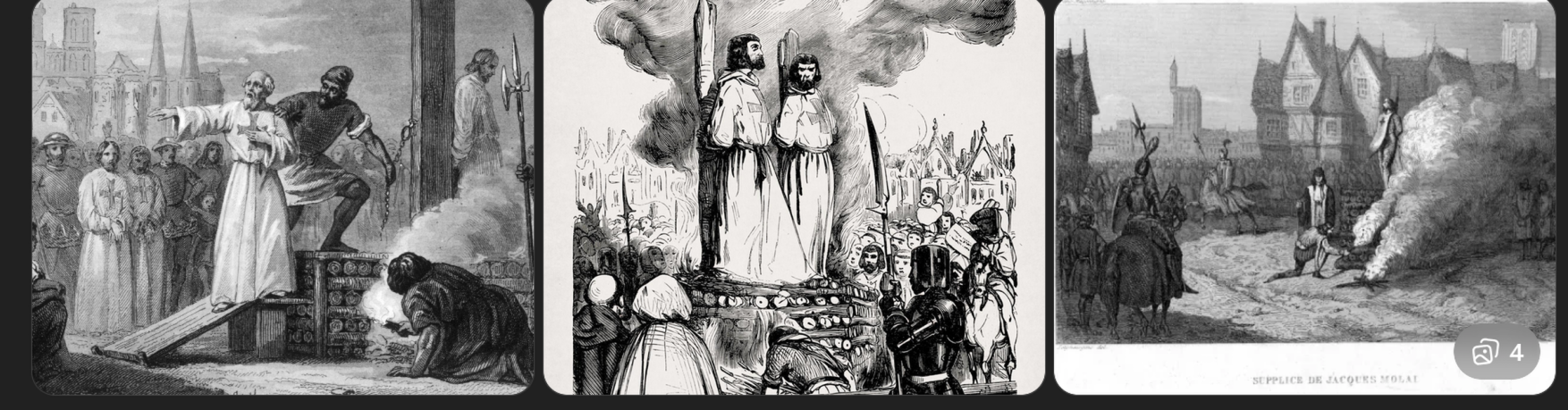
Over the following years, under continued pressure from Philip IV, the Pope formally dissolved the order in 1312. In 1314, Jacques de Molay, the Grand Master, was burnt at the stake in Paris. Contemporary accounts suggest he retracted earlier confessions before his death.
In France, the Templar structure was dismantled and its properties redistributed, yet the order did not disappear everywhere. In Portugal, it was reorganised rather than destroyed, in Scotland, it appears to have faced less direct suppression.
If assets, records, or knowledge were transferred out of France before or during the arrests, they would not necessarily appear in French inventories.
This possibility does not prove that the Templars escaped en masse with treasure. It does, however, show that the historical record contains gaps — particularly concerning movable wealth and maritime assets.
And it is within those gaps that later traditions of survival, relocation, and hidden treasure have taken root.
Survival in Portugal and the Maritime Connection
In Portugal, the Templars were reorganised rather than destroyed. Under the Portuguese crown, they became the Order of Christ. Much of their property remained intact, and many members continued under the new structure. Their red cross symbol survived in modified form.
The Order of Christ later became closely connected to Portuguese maritime expansion. Prince Henry the Navigator, who played a major role in advancing Atlantic exploration during the fifteenth century, served as Grand Master of the Order.
This continuity is historically documented. It shows that the Templar institution did not disappear entirely. In at least one Atlantic-facing kingdom, it adapted and became involved in overseas exploration.
If knowledge, expertise, or even information gathered in the eastern Mediterranean survived within this structure, it could have entered a state actively engaged in expanding westward and southward.
The Atlantic Before Columbus
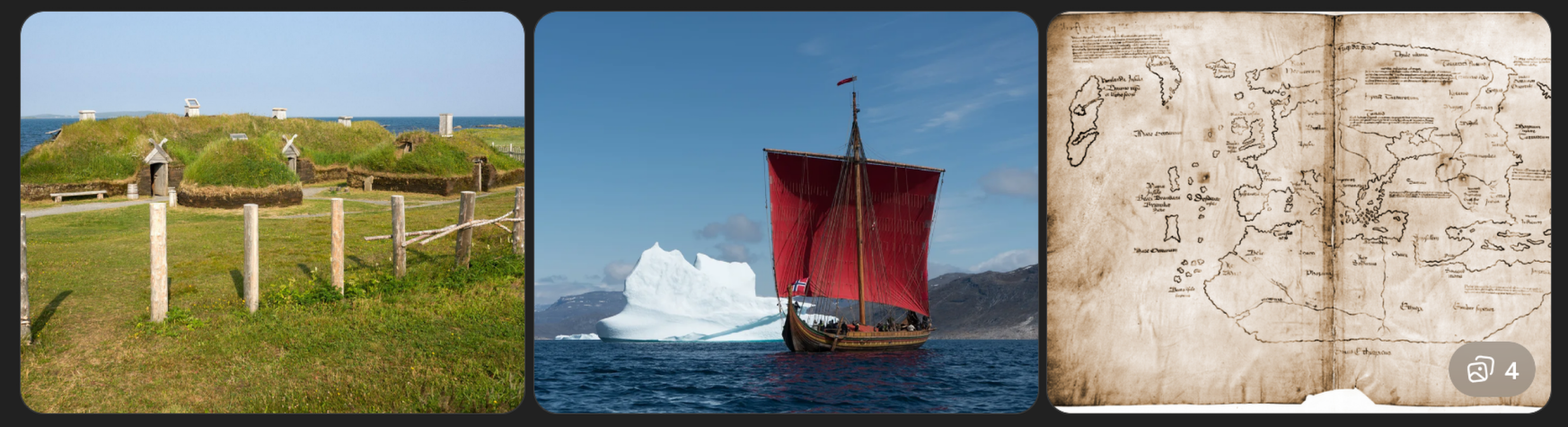
The confirmed Norse settlement at L’Anse aux Meadows in Newfoundland shows that Europeans reached North America around the year 1000 CE. Archaeological evidence demonstrates that medieval ships were capable of crossing the Atlantic and returning.
By the fourteenth century, ship design and navigation had improved further. Atlantic ports in France, Portugal, and the British Isles were active in long-distance trade.
This does not prove that the Templars sailed west. However, it removes the claim that such a voyage would have been impossible.
Henry Sinclair and the Zeno Narrative
Henry Sinclair, also known as Henry St Clair, was a fourteenth-century nobleman and Earl of Orkney. The Sinclair family traced its origins to Normandy, before establishing itself in Scotland. Because Orkney had political ties to Norway, Sinclair operated within a North Atlantic world that included routes toward Greenland.
The claim that Sinclair reached North America comes from the Zeno Narrative, published in 1558. According to this account, Venetian sailors serving under a northern prince — often identified as Sinclair — travelled west beyond Greenland in the late 1390s.
Historians remain divided over the reliability of this text. Some view it as unreliable or altered. Others note that certain descriptions of geography align with real North Atlantic locations.
While there is no confirmed proof that Sinclair reached North America, the story persists because it fits within the broader context of maritime exploration during the period.
The Sinclair family later built Rosslyn Chapel in Scotland, which has long been linked to Templar legend.
Rosslyn Chapel and Symbolic Design
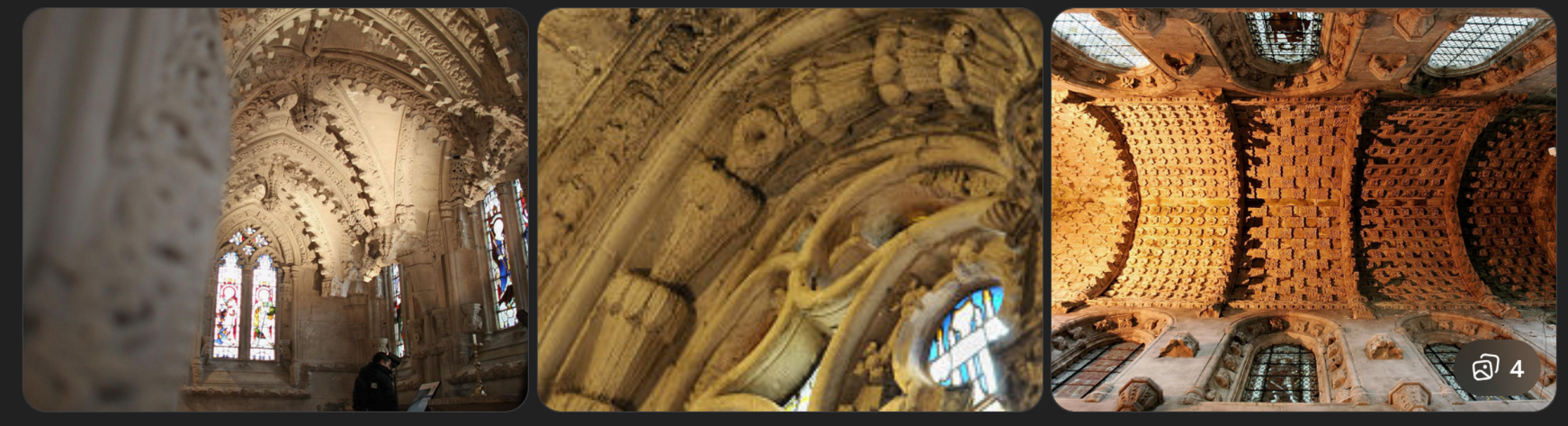
Some researchers have suggested that certain carvings resemble maize, a crop native to the Americas.
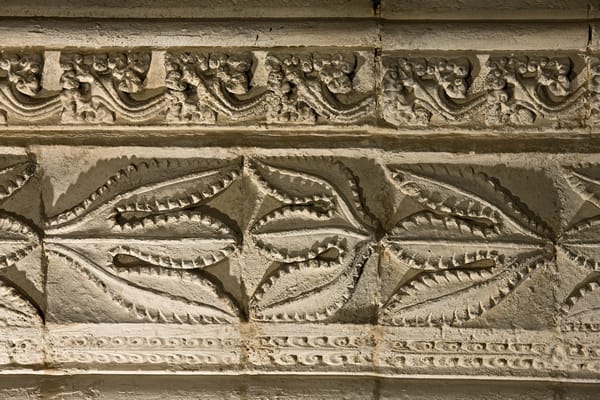
The maize debate remains unresolved. However, Rosslyn Chapel clearly reflects a symbolic tradition often associated with Templar and later Masonic ideas. Whether or not it encodes transatlantic knowledge, it demonstrates that Templar-linked symbolism persisted long after the order’s suppression.
North American Anomalies
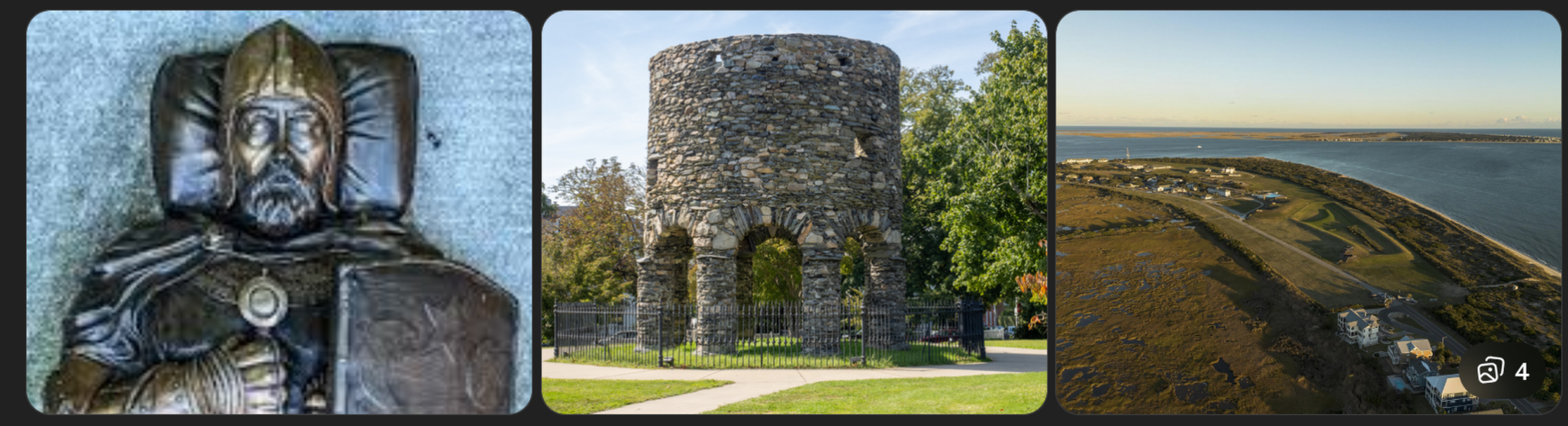
Several sites in north-eastern North America are frequently mentioned in discussions of possible pre-Columbian European contact.
The Westford Knight carving in Massachusetts appears to show a figure that some interpret as a medieval European knight. Its age is debated, and there is no confirmed dating linking it to the fourteenth century.
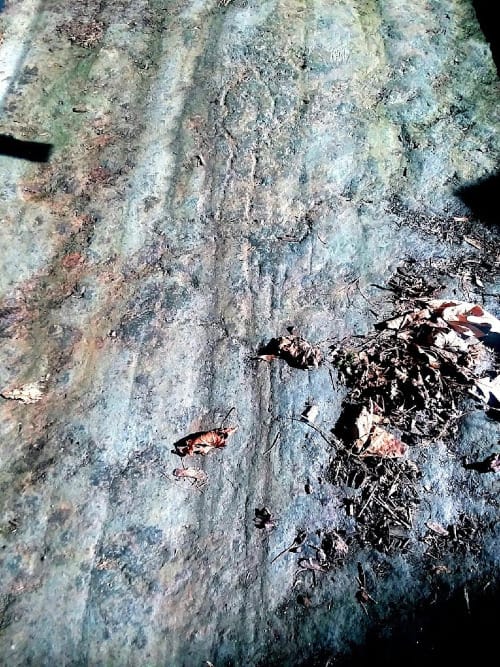
The Newport Tower in Rhode Island is an unusual circular stone structure traditionally described as a colonial windmill. Some researchers argue that its design resembles older European round churches. Mainstream historians generally consider it colonial in origin.
Oak Island in Nova Scotia has been the focus of long-running investigations into buried structures and artefacts. Although no confirmed Templar relic has been recovered there, the site remains part of the wider discussion because of its geographic connection to the Sinclair tradition.
None of these sites provides definitive proof of Templar presence. However, their repeated association with late medieval voyage traditions keeps them within the conversation.
Early Maps and the Piri Reis Chart
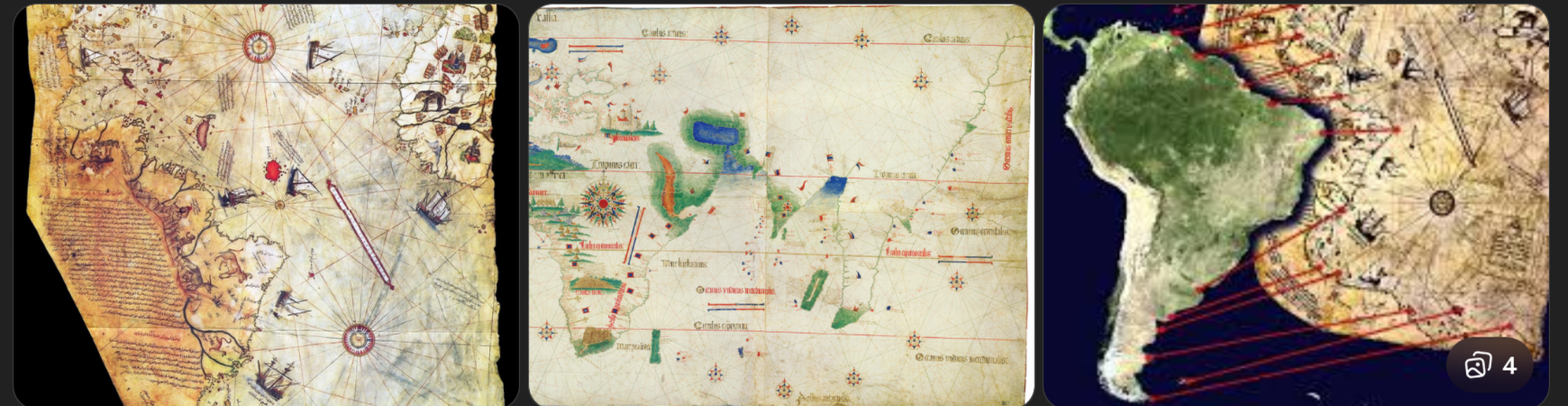
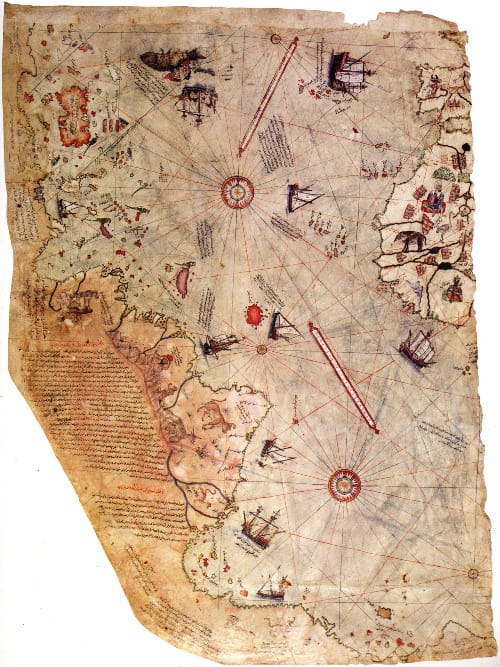
Early sixteenth-century maps have also raised questions. The Piri Reis map of 1513 shows parts of the South American coastline with notable accuracy. Piri Reis stated that he compiled his map from multiple earlier sources, including Portuguese charts.
The Cantino Planisphere of 1502 similarly displays detailed Atlantic coastlines shortly after Columbus’ voyages.
These maps do not prove earlier Templar exploration. However, they show that geographic knowledge was often drawn from multiple sources, some of which may no longer survive.
If reconnaissance voyages occurred before 1492, fragments of that knowledge could have influenced later maps.
Freemasonry and Later Transmission
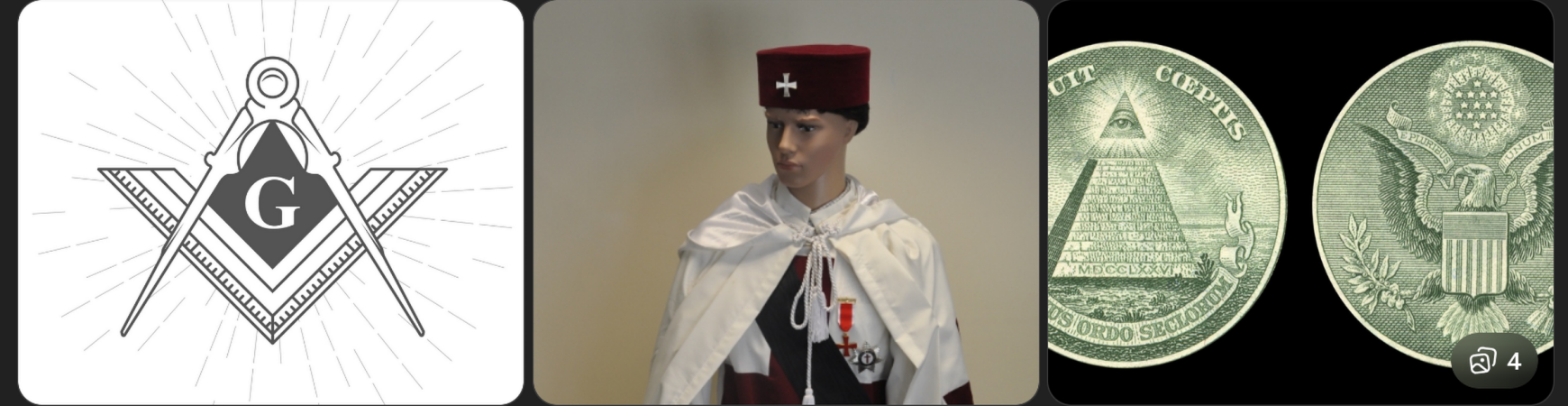
Centuries after the fall of the Templars, their imagery appeared in Freemasonry. Certain Masonic traditions include degrees referencing the Knights Templar. Whether this reflects direct continuity or later symbolic adoption remains debated.
Freemasonry influenced parts of the political elite in Europe and North America. Templar symbolism survived within cultural and ceremonial traditions long after the medieval order was dissolved.
There is no definitive proof that the Knights Templar established a settlement in North America before Columbus. No confirmed artefact places them beyond dispute on American soil, and no surviving medieval document openly records such a voyage.
However, the absence of proof is not the same as proof of absence.
The Templars did not vanish in 1307. They survived in Portugal under the Order of Christ. That successor institution became directly involved in Atlantic exploration. The Atlantic itself had already been crossed by Norse explorers centuries earlier, demonstrating that such voyages were technically possible.
Traditions of a late fourteenth-century voyage associated with Henry Sinclair persist. Rosslyn Chapel reflects a symbolic culture often linked to Templar memory. Sites such as the Westford Knight, Newport Tower, and Oak Island continue to raise questions, even if they remain debated. Early maps such as the Piri Reis chart show that geographic knowledge circulated through multiple sources, some of which are no longer preserved.
Individually, each of these elements can be explained or challenged. Taken together, they form a pattern that is difficult to dismiss outright.
It is entirely possible that the Templars did not establish colonies or leave clear physical traces in North America. Limited reconnaissance voyages, light trading,undertaken quietly and without formal declaration, would have been consistent with the political realities of the time. Maritime knowledge was valuable and often controlled. Exploration did not always begin with public announcement.
While certainty remains out of reach, the structural conditions for pre-Columbian contact existed. Institutional continuity, maritime capability, and geopolitical motive were all present. In that context, the idea that Templar-linked networks may have reached or at least become aware of western lands before 1492 cannot be reduced to simple fantasy.
The question remains open. But it is a serious question — and one grounded in historical possibility rather than legend alone.