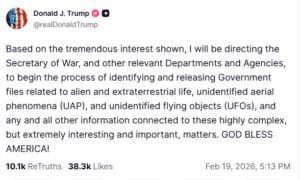
In February 2026, the U.S. Navy officially denied an appeal requesting the release of 78 photographs labeled as "unidentified aerial phenomena" (UAP). The appeal, submitted by The Black Vault under the Freedom of Information Act (FOIA), sought all Navy-archived photos designated as UAP. This formal denial upheld an earlier FOIA rejection from November 2024, which cited national security concerns as the basis for withholding the images. The decision was issued shortly after former President Donald Trump publicly expressed his intent to order the release of UFO and UAP files. Despite these recent high-profile statements, the Navy concluded that the photographs remain fully classified.
The Navy’s decision relied on FOIA Exemption (b)(1), which protects information properly classified under Executive Order 13526 regarding national defense or foreign policy. The Office of the Judge Advocate General confirmed that none of the 78 photos could be reasonably segregated or released in redacted form, underscoring strict adherence to classification guidelines. The Navy emphasized that once material is appropriately classified, agencies have no discretion to declassify or disclose it through FOIA processes. The classification authority rests with the Original Classification Authority, whose determinations the Navy appellate body must defer to. The appeal also highlighted ongoing congressional concerns about UAP overclassification, referencing a November 2024 hearing where lawmakers and witnesses called for greater transparency. However, the Navy’s ruling reflects the enduring power of established executive orders to restrict access to sensitive information, even amidst growing public and legislative demands. The balance between national security interests and public disclosure remains a significant issue in UAP investigations and broader government transparency debates.
Source: The Black Vault