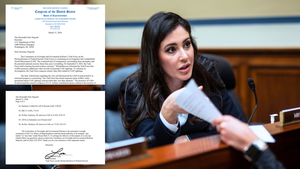

The Department of War recently responded to a Freedom of Information Act (FOIA) request filed by The Black Vault that sought emails referencing the so-called “Immaculate Constellation” program, attributed to Maj. Gen. Derek J. O’Malley. The agency declined to conduct any search, citing the position that the program does not exist and therefore no responsive records could be found. This decision stands in contrast to standard FOIA practice, where agencies typically conduct searches regardless of the veracity of the subject matter.
In its January 26, 2026, response, the Office of the Secretary of War/Joint Staff stated explicitly that no email search was undertaken because the alleged Special Access Program (SAP) was deemed non-existent. This rationale conflates the agency’s denial of the program’s reality with its procedural obligation under FOIA to search for records containing the requested terminology. By comparison, the Office of the Director of National Intelligence (ODNI) released an unclassified memorandum acknowledging the allegation while firmly denying the program’s existence, thus demonstrating internal record-keeping related to the claim itself.
This refusal raises significant questions about the limits of governmental transparency and adherence to FOIA requirements, particularly concerning claims involving classified or controversial programs. Historically, FOIA obliges agencies to search for records responsive to a request’s language, regardless of whether the underlying allegations are confirmed or denied. The Department of War’s decision departs from this norm, potentially undermining accountability and public trust in investigations related to unidentified anomalous phenomena and Special Access Programs. The discrepancy between agencies’ FOIA responses underscores ongoing tensions between classification, secrecy, and transparency in government operations.
Source: The Black Vault