Throughout history and across cultures, the number three has maintained a unique and profound significance. From ancient civilizations like Egypt and Greece to contemporary science and spirituality, the number three appears as a recurring symbol in religion, mathematics, and art. This prominence can be seen in mythology with the Three Fates who govern destiny, the architectural perfection of the Egyptian pyramids, and fundamental scientific discoveries such as the Pythagorean theorem. The persistence of this number’s influence suggests it holds an intrinsic connection to human understanding and the natural world.
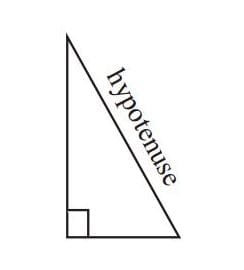
Mathematically, the number three features prominently in the Pythagorean theorem, which relates the sides of a right-angled triangle, a concept historically linked to the geometric design of the pyramids. This theorem symbolizes the perception of the triangle—and by extension, the number three—as a key to unlocking cosmic mysteries, a belief dating back to Pythagoras who credited Egyptian wisdom as the source. Biologically, the genetic code is based on triplets of nucleotides, underscoring the number’s fundamental role in life itself. In religious and philosophical contexts, triads appear repeatedly: Hinduism’s Trimurti embodies creation, preservation, and destruction; Buddhism venerates the Three Saints of the West; and Christianity presents the Holy Trinity. This recurrent theme often symbolizes harmony, balance, and completeness. Historically, scholars such as Isaac Newton explored these concepts through alchemy and physics, indicating a blend of mystical and scientific inquiry. The number three’s enduring prominence across disciplines highlights its symbolic power as a framework through which humanity seeks to interpret reality and the universe’s underlying order.
Source: Ancient Code