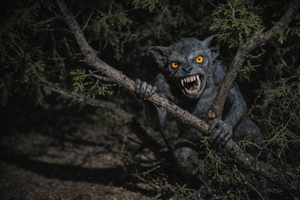

A baffling report from 1939 described mysterious quadrupedal animals captured in the Malayan jungles and shown to officials in Manila, featuring raccoon-like heads, dense fur, large owl-like eyes, and notably, two tongues. Weighing around 200 pounds, these creatures exhibited a mix of human- and cat-like teeth and a preference for bananas. Dubbed the “two-tongues,” their identity eluded observers for decades, inspiring speculation that they might be previously unknown species.
In December 2024, two independent readers of the ShukerNature blog proposed a plausible explanation: the reported second tongue likely refers to the sublingua, a lesser-known anatomical feature present in lorises, tarsiers, and close relatives. The sublingua is a tongue-like structure beneath the primary tongue used for grooming and lacks taste buds, thus resembling a second tongue. This insight helps explain the confusing original descriptions, though the stated 200-pound weight conflicts with the much smaller size of lorises and tarsiers, suggesting a possible error in converting metric units to imperial.
This identification matters because it resolves a long-standing cryptozoological enigma, clarifying how anatomical peculiarities and unfamiliarity with local wildlife can produce sensational reports. The case highlights the importance of careful species identification and awareness of native fauna when interpreting historical sightings. It also underscores how scientific knowledge can demystify folklore and cryptid reports, enriching understanding of biodiversity and historical wildlife documentation.
Source: ShukerNature