
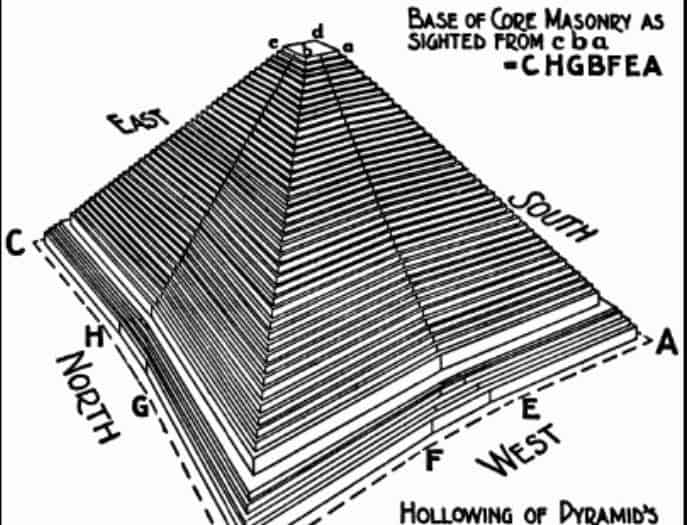
The Great Pyramid of Giza in Egypt is notable for its unusual eight-sided structure, a feature that sets it apart from other pyramids worldwide. This concavity, first documented in the late 18th century by English Egyptologist William Matthew Flinders Petrie, involves a subtle hollow or inward curve along the center of each of the pyramid’s four faces. While often believed to have been discovered in the 20th century, Petrie's early observations during his excavations in the 1880s remain significant. The indentations are measurable and visible from the air or under certain lighting conditions on the ground. Despite numerous studies, researchers have yet to agree on a definitive reason for this architectural choice.
Several theories have been suggested to explain the concave design of the pyramid’s faces. Some propose it was intended to prevent the stone faces from sliding or to improve alignment during construction, while others suggest aesthetic reasons or wear from erosion and removal of casing stones. However, these theories are largely considered improbable or insufficient by experts such as Martin Isler, who concluded that no single explanation satisfactorily accounts for the feature. Alternative hypotheses link the concavity to architectural errors, symbolic representations of astronomical cycles, or even structural functions to manage internal pressures, as suggested in John Williams’ hydraulic theory. The uncertainty about this feature adds to the mystery of the Great Pyramid, which has sparked many varied interpretations including speculations about its purpose and construction techniques.
The concave design is one of many unique characteristics of the Great Pyramid, reflecting the complexity and ingenuity of ancient Egyptian builders. It also highlights ongoing challenges in fully understanding the architectural decisions made during the pyramid’s construction around 2560 BCE. Theories about the pyramid’s shape and function contribute to broader discussions in archaeology and Egyptology about ancient construction methods and symbolic meanings. The Great Pyramid remains one of the most studied monuments of the ancient world, with many details still prompting debate and exploration among researchers.
Source: Ancient Code