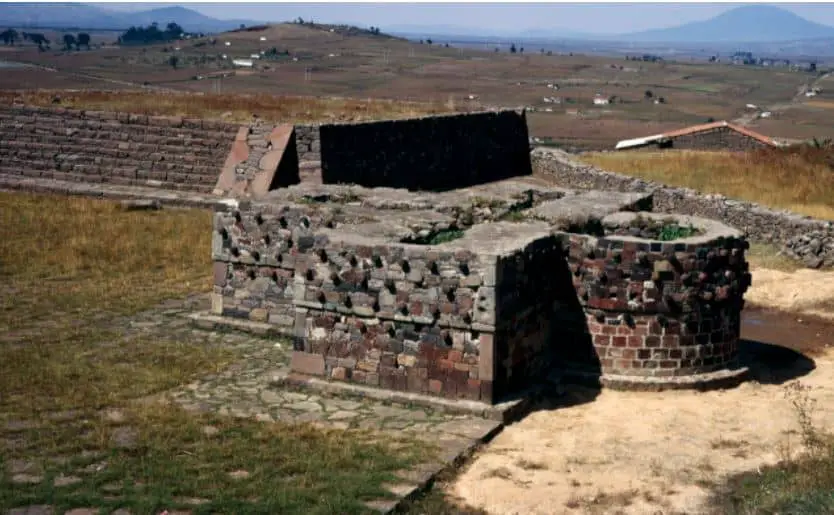
In 2026, researchers examining the archaeological site of Calixtlahuaca, near present-day Toluca, Mexico, identified a remarkable structure known as the Tzompantli or cross altar that bears a striking resemblance to the ancient Egyptian Ankh cross. The Ankh, often called the "key of life," is an Egyptian hieroglyphic symbol associated with eternal life and commonly seen in tomb paintings and religious art depicting deities of the afterlife. The Tzompantli at Calixtlahuaca is a stone structure originally decorated with carved skulls, characteristic of Mesoamerican skull racks, yet intriguingly shaped with a loop at the top similar to the Egyptian Ankh. This discovery has raised questions about parallel symbolisms and potential connections between these distant cultures.
The ankh symbol represents life and immortality in ancient Egypt, and its exact origins remain a mystery to scholars. Its presence in Mesoamerica, where Aztec and Maya cultures also embraced beliefs in life after death, is especially intriguing. Both civilizations used cross shapes in religious and ceremonial contexts, but the looped design of the Calixtlahuaca Tzompantli closely mimics the Egyptian ankh rather than the simple Tau cross commonly found in Mesoamerica. Scholars note that both cultures practiced complex funerary rituals and linked solar symbolism to life and death. While there is no definitive evidence of direct contact between Egypt and pre-Columbian Mexico, the similarities invite further study into cross-cultural symbolism and shared human themes such as death, afterlife, and eternal life. Calixtlahuaca remains only partly excavated, with archaeologists hopeful that ongoing research will clarify the origin and meaning of this unique artifact. The finding contributes to broader academic discussions about independent invention of symbols or possible diffusion of ideas across ancient civilizations separated by oceans and continents.
Source: Ancient Code