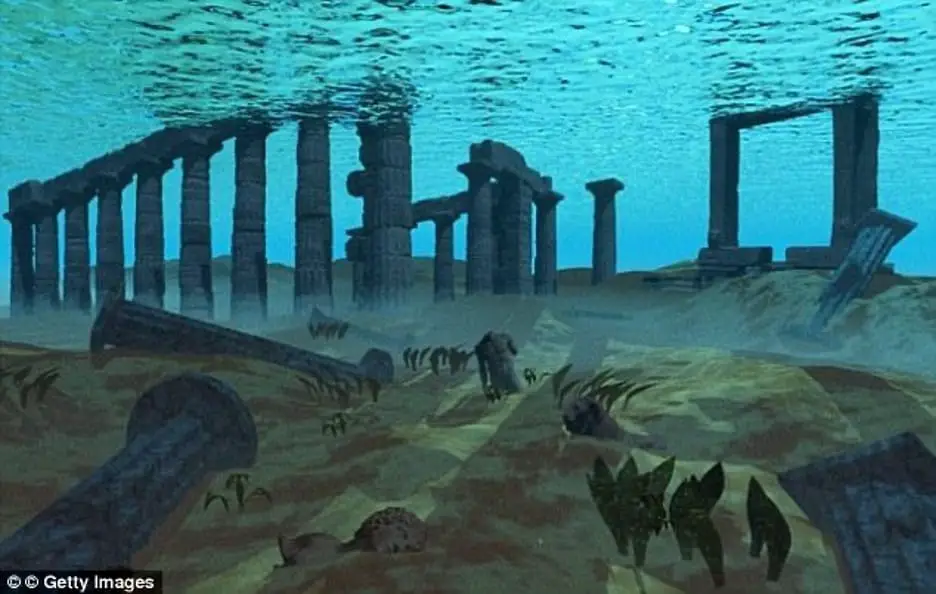
The legend of Atlantis, a fabled island nation said to have been destroyed by a cataclysmic event, has captivated imaginations for centuries. First described by the Greek philosopher Plato around 360 BCE, Atlantis was depicted as a powerful and advanced civilization that ultimately sank beneath the ocean. Despite numerous attempts, the actual location of Atlantis remains unknown, with theories placing it variously in the Atlantic Ocean, Mediterranean Sea, or even buried beneath deserts. Researchers, historians, and explorers have proposed sites including the Greek island of Santorini, the Azores in Portugal, Bimini in the Bahamas, Crete, and regions in southern Spain. However, conclusive evidence proving the existence or precise location of Atlantis has yet to be found.
Key theories about Atlantis often connect it to geological or archaeological phenomena suggesting ancient cataclysms, such as volcanic eruptions, tsunamis, or earthquakes, which could have sunk the island. Santorini, known for a massive volcanic eruption around 1500 BCE, is frequently linked to Atlantis, though its size and geography conflict with Plato’s descriptions. The Azores and Bimini have attracted attention due to their underwater features and local folklore, but lack definitive proof. Some scholars associate Atlantis with the Minoan civilization on Crete, which was advanced and suddenly declined around the same period mentioned in the legend. In recent years, DNA studies and archaeological discoveries in the Caribbean and elsewhere have introduced new possibilities, suggesting ancient people linked to Atlantis may have migrated between continents. Despite its uncertain reality, the Atlantis story continues to inspire exploration and debate, symbolizing humanity’s fascination with lost civilizations and the mysteries of the ancient world.
The search for Atlantis exemplifies a broader cultural and historical inquiry into human origins and past cataclysms, reflecting how myths and oral traditions can preserve echoes of ancient events. While scientific methods continue to expand knowledge of early civilizations and geological changes, Atlantis remains a blend of legend, hypothesis, and partially explored history. Its allure highlights the ongoing human quest to understand our planet’s past, especially periods marked by sudden environmental shifts and the rise and fall of complex societies.
Source: Ancient Code