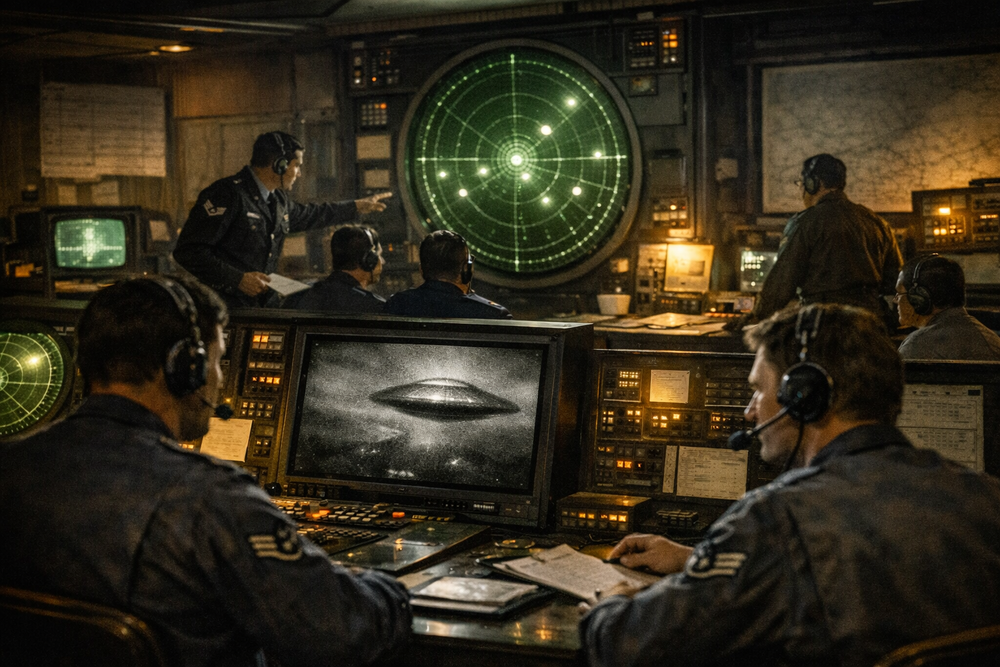
The Cold War was the most militarised period in human history. For four decades, two superpowers aimed thousands of nuclear warheads at each other across the Arctic, maintaining hair-trigger alert systems designed to detect — and respond to — any intrusion into sovereign airspace. In that context, reports of unidentified aerial objects operating near missile fields, nuclear bomber bases, and air defence networks were not curiosities. They were security events. This series documents six of the most significant.
In This Series
The Cold War as Context
Between the late 1940s and the collapse of the Soviet Union in 1991, the military establishments of both superpowers — and their respective alliance networks — maintained a state of permanent readiness that had no historical precedent. Radar networks scanned the skies continuously. Intercept pilots sat at five-minute alert. Missile crews waited underground, fingers figuratively poised over launch authorisation systems. In this environment, anything in the sky that could not be identified was, by definition, a potential threat.
What makes the incidents documented in this series remarkable is not merely that unidentified objects were reported — such reports were common throughout the Cold War and were routinely investigated and dismissed. What distinguishes these six cases is a pattern of qualities that set them apart: multi-witness testimony from trained military personnel; corroboration by ground and airborne radar; in several instances, direct interference with weapons systems; and an official investigative record that ranges from cursory to actively evasive.
Taken individually, each case presents anomalies that resist conventional explanation. Taken together, they form a pattern that spans two continents, two superpowers, and more than two decades — and that has never been coherently addressed by any government that experienced it.
“When you have military pilots, radar operators, and missile crews — the most rigorously trained observers in the world — all reporting the same class of phenomenon near the most sensitive installations on earth, the burden of proof shifts. It is no longer the witnesses who need to explain themselves.”
— Leslie Kean, Investigative Journalist
UFOs: Generals, Pilots, and Government Officials Go On the Record (Harmony Books, 2010), Ch. 1.
The Six Cases
Malmstrom Air Force Base Missile Shutdown
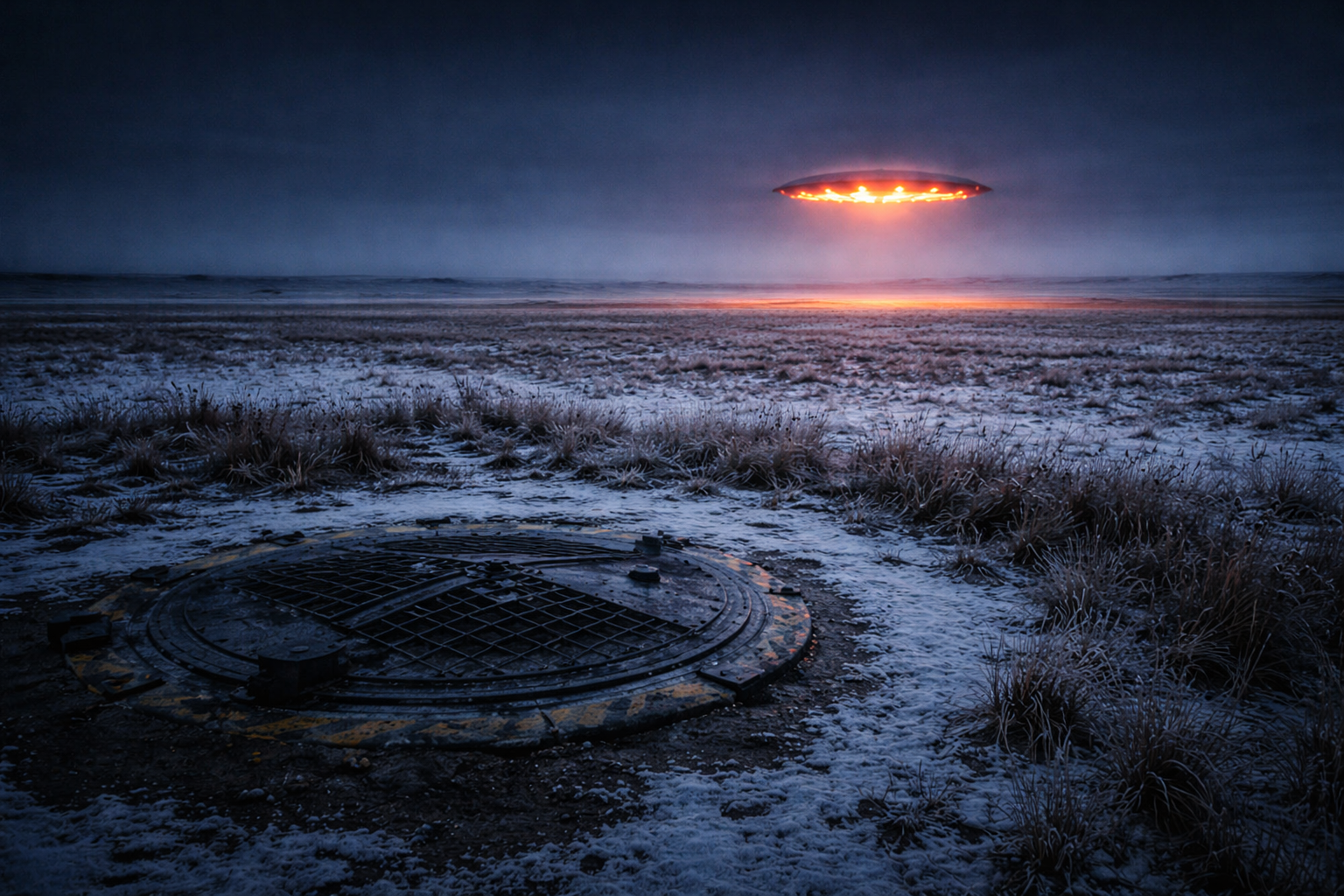
Of all the Cold War UAP incidents documented in this series, Malmstrom carries perhaps the greatest strategic weight. In the pre-dawn hours of March 16, 1967, the crew of Echo Flight — one of several Minuteman I ICBM squadrons operated by the 341st Strategic Missile Wing at Malmstrom Air Force Base, Montana — watched as all ten of their nuclear-armed missiles transitioned simultaneously into a "No-Go" status. No maintenance had been scheduled. No command had been issued. No known technical fault could account for the simultaneous failure of ten separate, hardened, independently isolated systems.
Concurrent with the shutdowns, security personnel stationed at and around the launch facilities reported a glowing, reddish-orange object moving silently above the site — hovering, manoeuvring without apparent propulsion, and departing at speed. First Lieutenant Walt Figel, the Echo Flight deputy commander, has confirmed on record that a guard called in the sighting in real time, before the missile failures were complete. A subsequent investigation by Boeing, the Minuteman's manufacturer, failed to identify a conventional cause. The Air Force attributed the event to an "unverified electrical pulse" — and never identified its source. Former launch officer Captain Robert Salas has testified for over three decades that a near-identical event occurred at a second Malmstrom squadron, Oscar Flight, within days — and that those records have never been produced.
Read the Full Case File →Minot Air Force Base Encounter
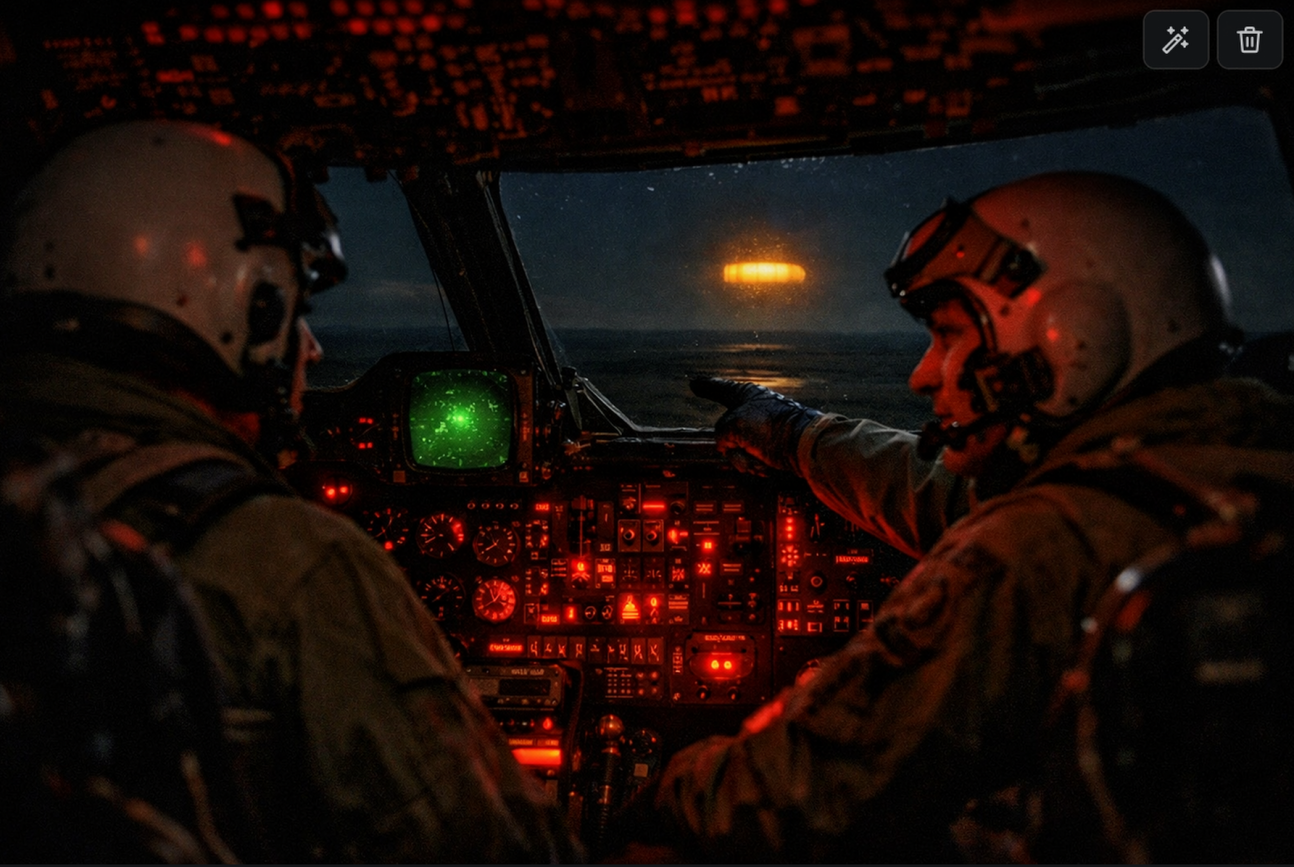
Just eighteen months after Malmstrom, another Strategic Air Command installation found itself at the centre of a UAP incident that would take decades to partially surface through declassified records. In the early hours of October 24, 1968, personnel at Minot Air Force Base in North Dakota — home to both B-52 strategic bombers and Minuteman ICBM squadrons — reported a large, brightly lit unidentified object operating in restricted airspace above the base. Ground security teams tracked the object visually as it moved slowly and silently over the missile launch facilities. Simultaneously, a B-52 on a training flight in the vicinity was diverted by air traffic controllers to investigate, and its crew made visual and radar contact with an object they could not identify.
The incident is notable for several reasons beyond the sighting itself. The Project Blue Book case file for the Minot encounter — one of the last significant cases before the programme was officially closed in 1969 — runs to over thirty pages of witness statements, radar data, and investigative notes. Despite this, Blue Book's conclusion attributed the sighting to a combination of an astronomical object and plasma phenomena, a determination widely regarded by analysts as inadequate given the multi-platform radar contact and the proximity to operational nuclear assets. Researchers who have reviewed the declassified Blue Book files have consistently noted that the investigation appeared to reach its conclusion before the evidence had been fully examined.
Read the Full Case File →Tehran Phantom Intercept
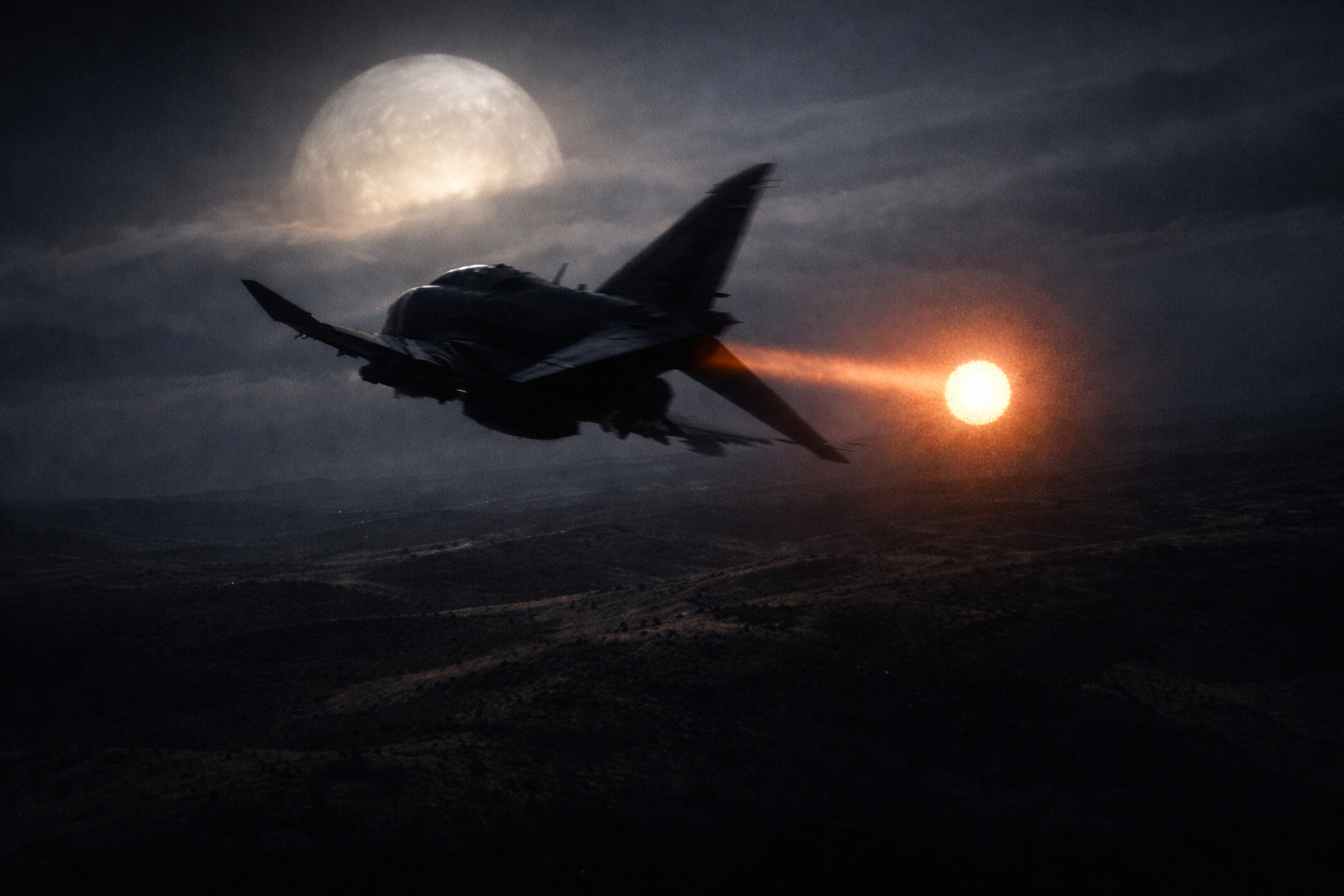
The Tehran intercept of September 1976 stands as one of the most thoroughly documented UAP encounters in aviation history, and one of the very few to have been formally assessed as unexplained by an official U.S. government intelligence agency. In the early morning hours of September 19, the Imperial Iranian Air Force scrambled two F-4 Phantom II fighters to intercept a luminous object reported by multiple civilian witnesses over Tehran. Both aircraft made radar and visual contact with an object described as intensely bright, star-like in appearance at distance but resolving into a distinct form at closer range. The object manoeuvred in ways that exceeded the performance envelope of any known aircraft of the period.
What elevated this case above the routine was a series of extraordinary equipment failures during the intercept. The first F-4 experienced a complete loss of instrumentation and communications as it closed on the object — failures that resolved the moment the aircraft turned away. The second aircraft's pilot attempted to fire an AIM-9 heat-seeking missile at the object, only to find his weapons systems had locked up and become inoperable at the critical moment. A Defence Intelligence Agency report, subsequently declassified, assessed the Tehran incident as a genuine UAP event exhibiting characteristics consistent with "classic" UFO behaviour — and specifically noted the weapons system interference as a factor of particular significance. The DIA document remains one of the most cited pieces of official UAP documentation in the research literature.
Read the Full Case File →Rendlesham Forest Incident
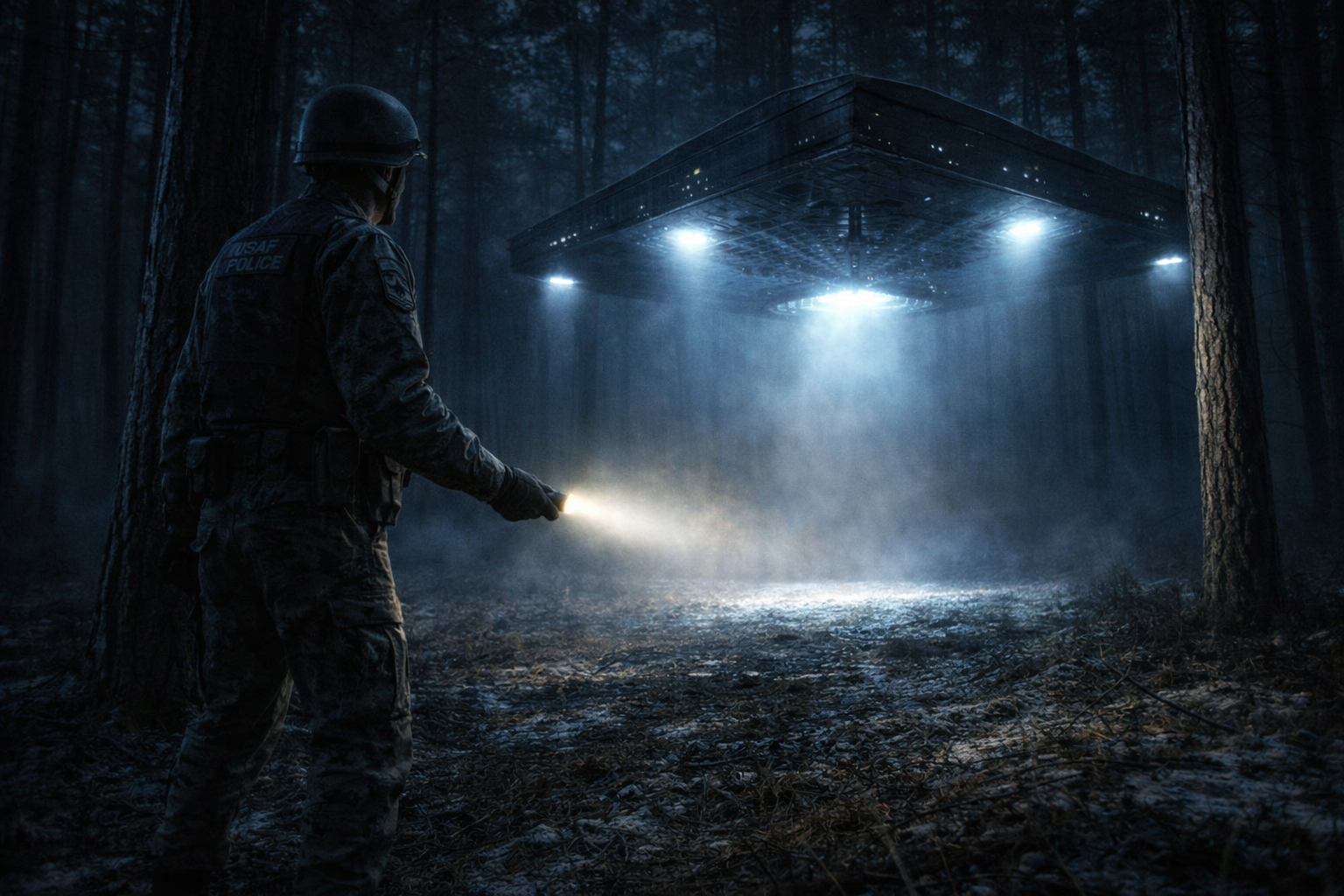
Rendlesham Forest, on the Suffolk coast of England, is where Britain's most significant — and most contested — military UAP incident unfolded over three nights at the end of December 1980. The twin NATO bases of RAF Bentwaters and RAF Woodbridge, operated at the time by the United States Air Force's 81st Tactical Fighter Wing, reportedly stored tactical nuclear weapons — a fact that lends the incident a strategic dimension that has never been fully explored in the public record. On the night of December 26, security personnel investigating unusual lights in the forest encountered a structured, metallic craft that had apparently landed in a clearing. The deputy base commander, Lieutenant Colonel Charles Halt, led a second patrol into the forest on the night of the 27th, during which the object returned, performing manoeuvres above the tree line and, according to Halt, directing beams of light down into the weapons storage area of the base.
What distinguishes Rendlesham from many UAP incidents is the quality and breadth of the surviving primary documentation. Halt produced a now-famous memorandum to the British Ministry of Defence within days of the incident, calmly and methodically describing what his patrol had witnessed. An audio recording made by Halt in the forest on the second night — capturing his real-time observations as the events unfolded — remains one of the most compelling pieces of primary evidence in the UAP research record. Physical evidence including indentations in the ground and elevated radiation readings at the landing site was documented and measured. The British government's response, characterised by studied indifference, has been a source of persistent frustration for researchers and former personnel alike.
Read the Full Case File →Soviet Missile Base Incident, Ukraine
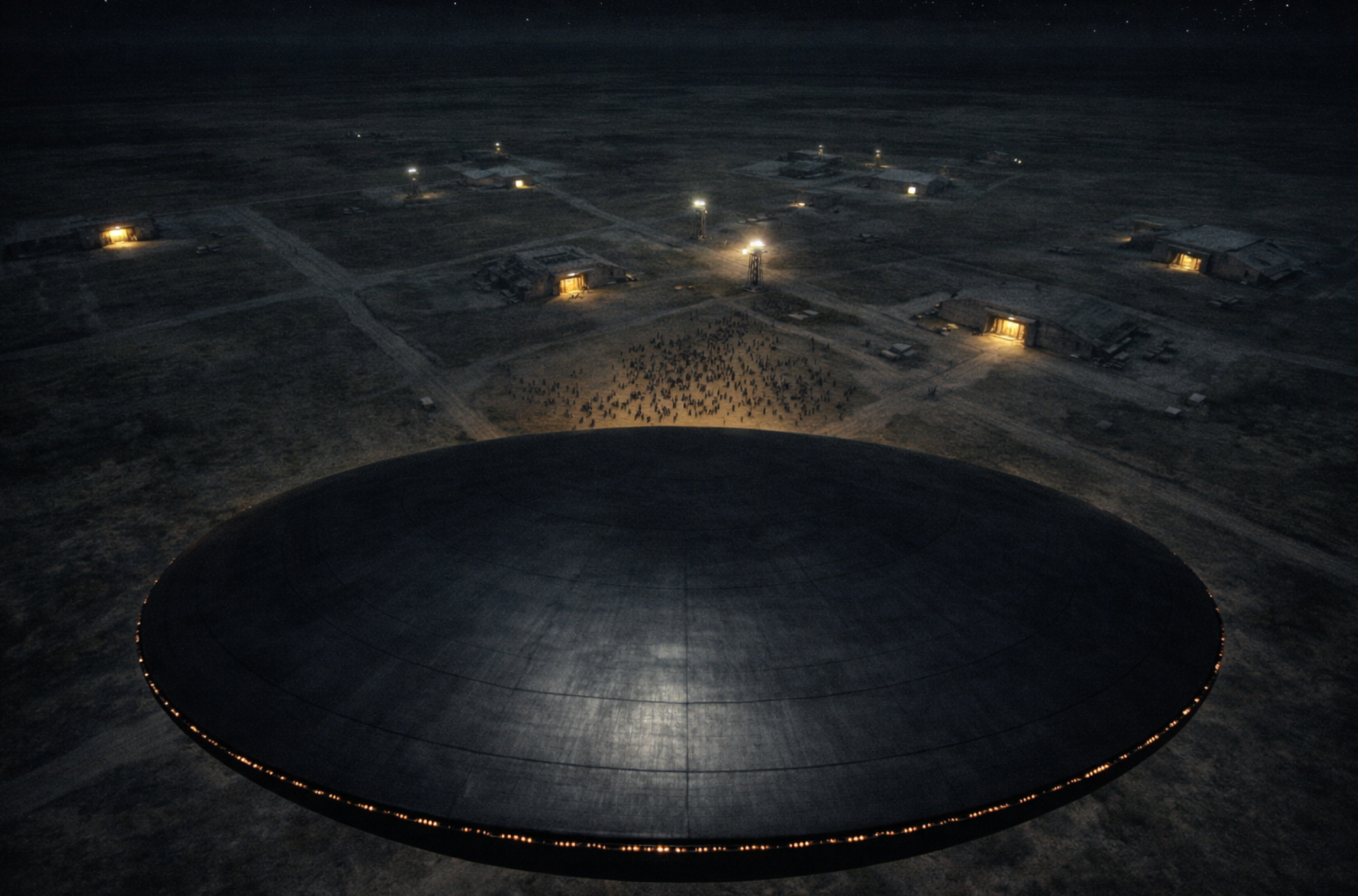
Among the Cold War UAP incidents that emerged from behind the Iron Curtain following the Soviet collapse, the October 1982 event at a missile base near Byelokoroviche in the Ukrainian SSR stands out for both its severity and the seniority of those who eventually testified to it. According to accounts provided by former Soviet military officers to Ukrainian UFO researcher Vladimir Valuev and subsequently disseminated through Western research channels, a disc-shaped object was observed hovering for an extended period over a nuclear missile installation. During this time — and this is the detail that elevates the incident to strategic significance — the missiles' launch control systems activated without authorisation. The codes required to initiate a launch sequence were reportedly entered autonomously, and the system held in a pre-launch state for a period of approximately fifteen seconds before returning to standby.
The implications, if the account is accurate, are almost incomprehensible in strategic terms. A nuclear launch initiated without human authorisation, apparently in association with an unidentified aerial presence, would have represented — for those fifteen seconds — one of the most dangerous moments of the Cold War. Former Soviet military personnel who spoke on the record about the incident described an institutional response of immediate classification and enforced silence. The accounts did not surface publicly until after 1991, and the documentary record remains largely inaccessible. What makes this case particularly significant in the context of this series is the parallel it draws with Malmstrom — two opposing nuclear powers, both apparently experiencing weapons system anomalies in association with unidentified aerial objects, neither able or willing to discuss it publicly.
Read the Full Case File →The Belgian UFO Wave
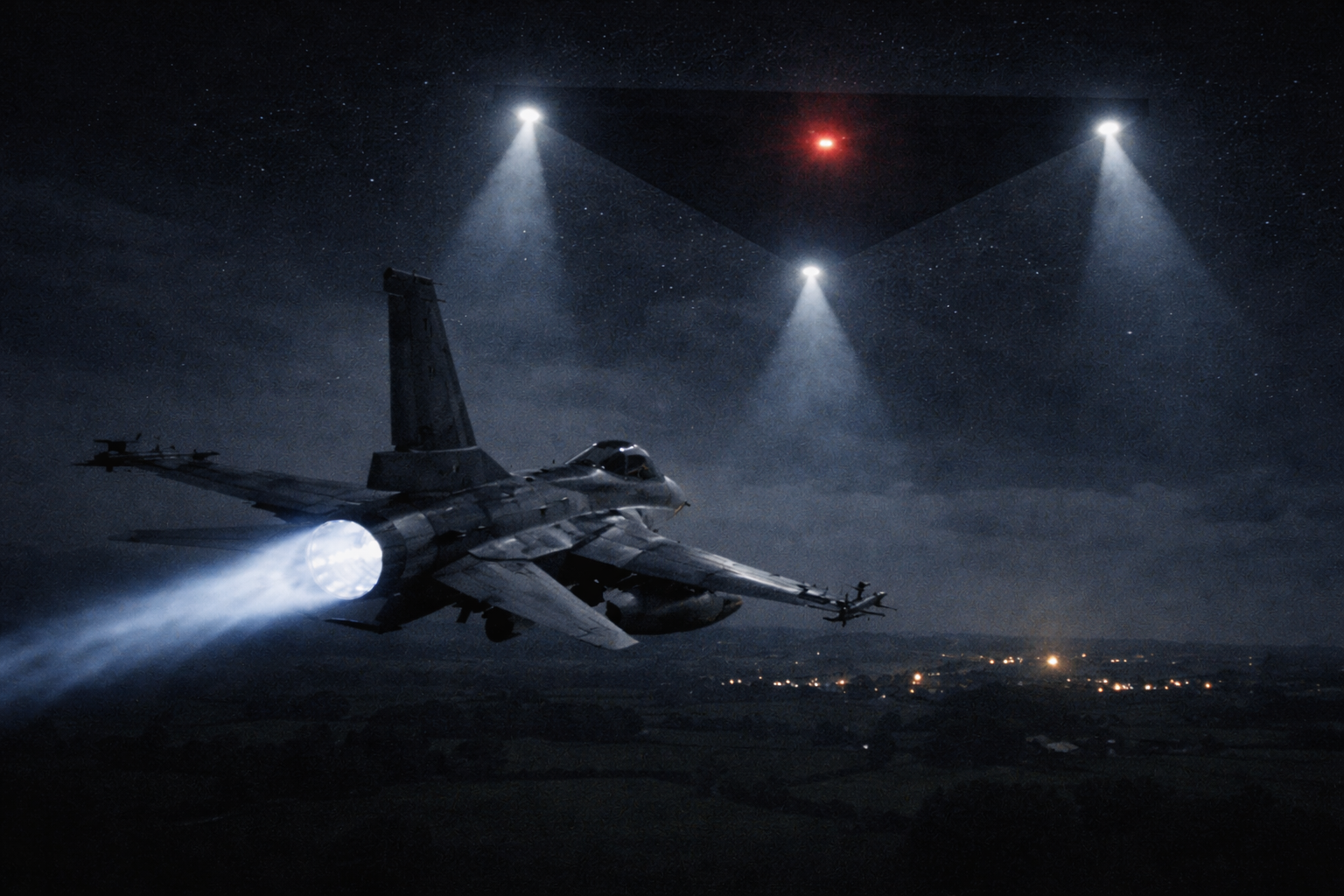
The Belgian UFO wave of 1989–1990 is unique among the incidents in this series in its sheer scale and in the degree of official engagement it produced. Over a period of several months, thousands of witnesses across Belgium — including police officers, military personnel, and civilian aviation professionals — reported large, triangular objects moving silently at low altitude, frequently displaying brilliant white lights at each apex and a red light at the centre. The reports were so numerous, so consistent, and so geographically distributed that the Belgian Air Force took the unprecedented step of formally acknowledging the phenomenon and conducting active intercept operations. On the night of March 30–31, 1990, two Belgian Air Force F-16s were scrambled to intercept objects that had been confirmed on both ground radar and the aircraft's own onboard systems.
What the F-16 crews encountered that night has become one of the most analysed events in UAP research. The objects performed manoeuvres that the Belgian Air Force's own post-incident analysis described as impossible for any known aircraft — dropping from 10,000 feet to 500 feet in seconds, accelerating to speeds that would have been immediately fatal to a human pilot under conventional g-force loading, and appearing to respond to the fighters' radar lock by actively evading. Major General Wilfried De Brouwer, the chief of operations of the Belgian Air Force at the time, subsequently stated publicly that the events of that night remained unexplained and that the objects displayed performance characteristics that current aerospace technology could not account for. Belgium's willingness to engage openly with the phenomenon — producing declassified radar data, official press conferences, and on-the-record senior officer testimony — remains a model of institutional transparency that few other nations have matched.
Read the Full Case File →Cold War UAP Incident Timeline
The six incidents in this series span more than two decades of the Cold War period. Plotted chronologically, they reveal not a random scatter of unexplained events but a consistent pattern: structured, apparently controlled objects operating with apparent impunity in the most heavily defended airspace on earth.
-
1967 · USAMalmstrom AFB Missile ShutdownTen Minuteman I ICBMs simultaneously disabled at Echo Flight, Montana. Unidentified luminous object reported over the site. Boeing investigation finds no conventional cause.
-
1968 · USAMinot AFB EncounterGround and airborne radar contact with unidentified object over Strategic Air Command base. B-52 crew diverted to investigate. Project Blue Book case file runs to 30+ pages.
-
1976 · IranTehran Phantom InterceptTwo F-4 Phantoms scrambled. Weapons and instrumentation systems fail during intercept approach. DIA formally assesses the incident as unexplained.
-
1980 · UKRendlesham Forest IncidentThree-night encounter near NATO nuclear base in Suffolk. Lt. Col. Charles Halt memo and contemporaneous audio recording survive as primary documents. Physical ground traces recorded.
-
1982 · USSRSoviet Missile Base IncidentDisc-shaped object reported over Ukrainian missile base. Launch control systems reportedly activated autonomously for approximately 15 seconds. Immediately classified.
-
1989–1990 · BelgiumBelgian UFO WaveThousands of witnesses. Two F-16 intercepts. Belgian Air Force confirms radar contact and publishes declassified data. Major General De Brouwer states publicly the objects remain unexplained.
Browse the Series
Each case file in this series is written to stand alone as a complete account — but read together they form a connected historical record. New case files are published as the series develops.
Frequently Asked Questions
What is the Cold War UFO Case Files series?
Cold War UFO Case Files is a Stranger Times investigative series documenting reported encounters between military personnel and unidentified aerial phenomena at and around strategic installations between 1967 and 1990. Each case file examines the documented timeline, primary witness testimony, official investigative records, and the broader national security implications of the incident.
Why do these incidents matter historically?
Several of these cases involve apparent interference with operational nuclear weapons systems — a fact that carries profound strategic implications regardless of the ultimate explanation. The pattern of incidents across multiple nations and military branches suggests a phenomenon that was taken seriously at the highest levels of Cold War military command, yet was consistently suppressed or inadequately investigated in the public record.
Are these cases proven to involve extraterrestrial craft?
No. The series documents reported events and the responses of military authorities to those events. The origin of the objects involved has never been officially established in any of these cases. The question of whether they represent advanced human technology, natural phenomena, or something else entirely remains genuinely open — and that openness is itself significant.
What official investigations were carried out?
Official investigations vary significantly by case. The U.S. Air Force's Project Blue Book examined several American incidents before its closure in 1969, though critics have consistently noted its methodology prioritised explanation over investigation. The Belgian Air Force produced the most transparent official engagement of any nation, including declassified radar data and on-record senior officer testimony. The DIA formally assessed the Tehran incident as unexplained. In most cases, the documentary record is incomplete, partially classified, or contested.
Where should new readers start?
Readers new to the series can begin chronologically with the Malmstrom missile shutdown of 1967 — the earliest and arguably most strategically significant case — or with Rendlesham Forest (1980), the most extensively documented incident and one with a substantial body of published research and primary source material.
— Cold War UFO Case Files · Stranger Times —
This series is an ongoing investigative project. Case files are added as research is completed.
All accounts are drawn from declassified documentation, FOIA-obtained records, and on-the-record testimony.