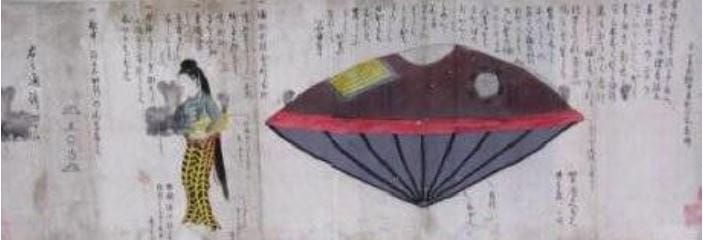
In 1803, an unusual object washed ashore in Hitachi Province on Japan’s eastern coast, sparking local intrigue and the spread of a curious legend. The object, described as a round, hollow vessel made of iron and glass, appeared unlike any known ship in Japan at the time. Alongside the ship was a woman with pale skin and red hair, dressed in unfamiliar clothing and holding a mysterious box. Fishermen who encountered her could not understand her language, and the ship bore strange symbols that locals could not decipher. Accounts of this event were later recorded in three texts published between 1825 and 1844, the most detailed being the Toen shōsetsu.
The hollow ship, or Utsuro-bune, was said to be coated with black paint and featured small windows with bars, clogged with tree resin, as well as iron plates of exceptional quality—details that made it seem foreign and exotic to contemporaries. The woman, who stood about 1.5 meters tall, carried a box of unknown significance that she guarded closely. Folklore suggested she might have been a princess exiled to the sea after a tragic love affair, possibly holding her lover’s severed head in the box. While circular boats did exist in Japan, as confirmed by later ethnological research, the combination of the vessel's design and the story’s elements fueled speculation. Modern investigations generally conclude the tale blends folklore with imaginative storytelling rather than evidence of foreign or otherworldly technology. The Utsuro-bune remains a reflection of Edo-period fascination with mysterious and paranormal phenomena, illustrating how stories from that time often mixed reality with the fantastical.
Source: Ancient Code