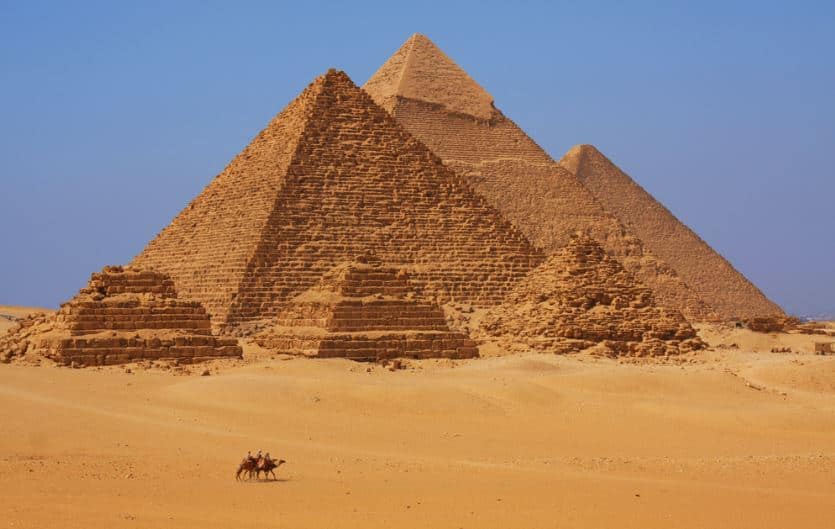
The Pyramids of Giza, including the Great Pyramid of Khufu, have long been objects of scholarly study and public fascination. These monumental structures are traditionally dated to the Old Kingdom period of Ancient Egypt, generally placed between 2589 and 2504 BC. The construction of the three main pyramids at Giza is attributed to the pharaohs Khufu, Khafre, and Menkaure. Despite this consensus, there remains considerable uncertainty about their precise age, largely because the pyramids are made of stone, which cannot be directly radiocarbon dated. Instead, dating relies on organic materials associated with their construction and use, leading to a range of proposed dates. Recent academic work continues to challenge and refine these chronologies, reminding us of the complexities involved in dating these ancient monuments.
Key details about the age of the pyramids hinge on radiocarbon analysis of organic matter found near or within the structures. Studies from the 1980s, for example, produced radiocarbon dates for the Great Pyramid ranging from 2853 to 3809 BC, somewhat predating the traditionally accepted construction period. Discrepancies such as these have fueled alternative theories, including some suggesting the monuments could be far older. The Great Sphinx, closely associated with the pyramid complex, is also subject to debate, with radiocarbon dates spanning from 2085 BC to 2746 BC. However, radiocarbon dating in limestone contexts is inherently limited by the lack of datable organic remains and the possible contamination of samples. Moreover, fluctuations in atmospheric carbon-14 levels through geological epochs have been shown to affect dating accuracy, adding further uncertainty. Despite such challenges, mainstream Egyptology maintains that the pyramids were erected during Egypt’s Fourth Dynasty, reflecting the technical and organisational advances of the Old Kingdom.
The significance of accurately dating the Giza pyramids goes beyond mere chronology; it informs our understanding of ancient Egyptian society and its technological capabilities. The traditional dating situates pyramid construction in a context of political unification and agricultural prosperity along the Nile, which facilitated the complex labour organisation required. These structures represent the apex of Old Kingdom architectural achievement and have long stood as physical testimonies to early civilisation’s ingenuity. Local folklore venerates the pyramids as divine gateways, reinforcing their cultural and religious meaning in Egyptian history. Scientific efforts continue to explore the methods of construction, including debates over stone quarrying, transportation, and assembly techniques. This ongoing dialogue between archaeology, geology, and Egyptology exemplifies the broader challenges of studying monuments where limited direct evidence necessitates careful interdisciplinary scrutiny. As methodologies improve and new data emerges, our understanding of these ancient masterpieces continues to evolve without definitive resolution.
Source: Ancient Code