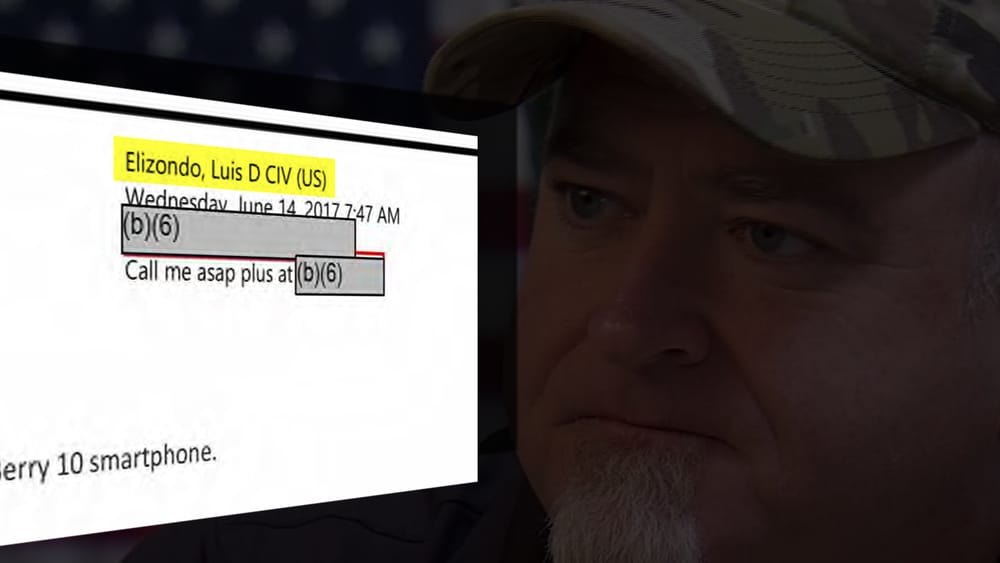
Luis Elizondo, a former Pentagon official known for his role in the Advanced Aerospace Threat Identification Program (AATIP), has been at the centre of modern discussions on Unidentified Aerial Phenomena (UAP). Recent Freedom of Information Act (FOIA) disclosures reveal that the U.S. Department of Defense (DoD) destroyed Elizondo’s official emails, a development that significantly complicates independent verification of his accounts and involvement. These email deletions primarily affect communications from his tenure before his 2017 resignation. Investigative requests then shifted to examining emails of alleged correspondents within the DoD to partly reconstruct the destroyed records. These efforts have resulted in a fragmented but revealing archive that offers insights into Elizondo’s interactions with military personnel and intelligence officials during his AATIP involvement.
Key figures linked to Elizondo include Marcel Lettre, former Under Secretary of Defense for Intelligence, and Brennan McKernan, a Navy intelligence analyst who led the Pentagon’s Unidentified Aerial Phenomena Task Force (UAPTF). FOIA releases show varying levels of correspondence between them and Elizondo, although gaps remain due to email destruction or absence of records. For instance, no communications were found between Elizondo and James Clapper, former Director of National Intelligence, or Patrick Shanahan, who served as Acting Secretary of Defense during Elizondo’s claimed period of service. Notably, the emails of Mark Sanders, presumed to be the Director of the Foreign Material Program and an alleged AATIP briefing recipient, were confirmed destroyed post his DoD departure in 2017. The partial recovery of Elizondo’s communications via third-party archives has shed light on internal discussions regarding widely circulated UAP videos such as FLIR, Gimbal, and GoFast, while highlighting the challenges in government transparency and record preservation concerning UAP programs.
This case illustrates enduring issues in UAP research where the government’s record-keeping and classification practices limit full transparency. Elizondo’s claims about AATIP and government knowledge of UAPs have been foundational to recent public debate on the phenomenon, but the destruction of primary communication archives undermines thorough independent validation. Historically, anomalies in official records are not unusual in intelligence and defence contexts, particularly regarding sensitive or classified programmes. The DoD’s creation of later offices such as the All-domain Anomaly Resolution Office (AARO), which succeeded UAPTF, signals a continuing institutional interest but also evolving protocols in managing UAP disclosure. The partial archival effort through FOIA for Elizondo and his contacts serves as a case study in both the obstacles to documenting unofficial history within the defence establishment and the persistent intrigue around aerial phenomena that defy conventional explanation. As disclosures progress, how government agencies handle and preserve records on UAP-related activities remains a crucial question for researchers and policymakers.
Source: The Black Vault