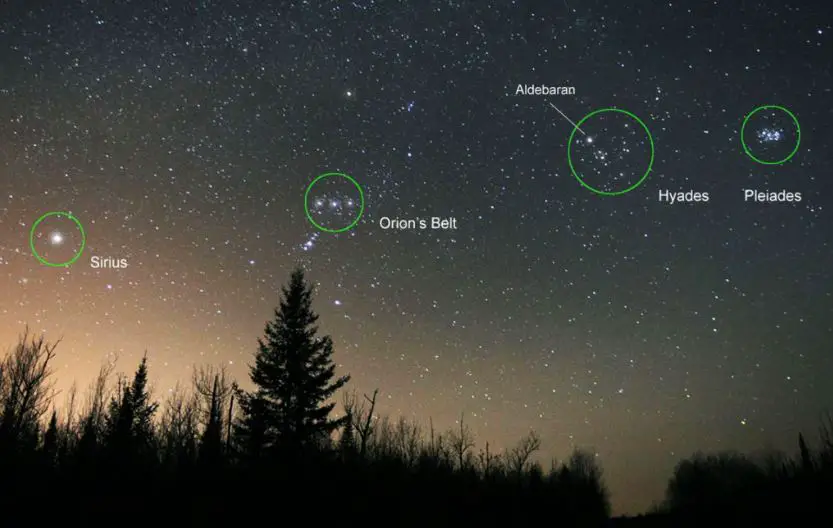
Sirius and the constellation Orion have held profound significance for many ancient civilizations across the globe, from Egypt to the Americas and Asia. These celestial objects were not merely observed but deeply woven into religious beliefs, mythologies, and cultural practices. Particularly, ancient Egyptians revered Sirius and Orion as symbols of deities Isis, Osiris, and Hathor, which influenced their ceremonies and architectural alignments. Notably, monuments like the Giza Pyramids were constructed with precise orientations toward stars such as Orion’s belt and Sirius. These practices date back thousands of years, with some alignments tracing to as early as 10,500 BCE.
The Great Pyramid of Giza exemplifies the intricate connection between celestial bodies and human constructions; its passages and faces align with key stars, including Al Nitak in Orion and Alpha Draconis, the pole star of circa 2170 BCE. Such alignments are believed to symbolize deeper spiritual or cosmological messages, linking earthly monuments to the heavens. Ancient Egyptian mythology describes Sirius as representing Isis, while Orion corresponded to Osiris, reinforcing cultural narratives that humanity’s origins or divine influences came from these stars. Similar reverential treatment is noted among other cultures, such as the Dogon of the Sahara and the Native American Hopi tribe, whose sacred sites and cosmologies also reflect Orion’s constellation. Some historians speculate that events like the Apollo moon landings used timing and site alignments connected to these stars, inspired in part by individuals knowledgeable of ancient star worship.
Across civilizations separated by vast distances, the recurring prominence of Sirius and Orion suggests a shared cosmic symbolism that transcends geographical boundaries. Their significance spans astronomy, religion, and cultural identity, offering insights into how early humans understood their place in the universe. The enduring legacy of these stars illustrates humanity’s long-standing fascination with the night sky and its influence on myth, architecture, and ritual through millennia.
Source: Ancient Code