
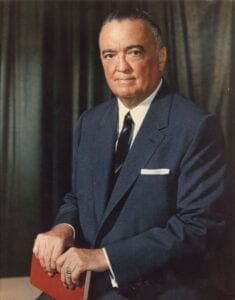
The Federal Bureau of Investigation (FBI) holds extensive archival material relating to John Edgar Hoover, the agency’s first director, who served from 1924 until his death in 1972. These files, released in multiple batches, comprise thousands of pages and include documents spanning Hoover’s entire tenure, covering both his professional activities and personal correspondences. Hoover is noted for establishing foundational forensic technologies within the FBI, including centralised fingerprint files and pioneering forensic laboratories. The FBI’s archival release features appointment calendars, phone logs, and formal files, offering a detailed view into Hoover’s influence over US law enforcement. These records have been digitised and made publicly accessible through the FBI’s Vault, serving as a crucial resource for researchers interested in mid-20th-century American investigative history.
Among the released materials are several volumes exceeding a thousand pages each, such as the “Official and Confidential” files and detailed phone and appointment logs, providing unprecedented insight into Hoover’s daily operations and decision-making processes. Witness and analyst evaluations underscore Hoover’s role in modernising police methods, while also raising ongoing debates about his controversial use of surveillance and the creation of what is referred to as the FBI Index—a precursor to modern blacklisting and counterterrorism screening databases. Although these archives do not focus explicitly on paranormal or cryptid phenomena, Hoover’s tenure overlapped with a period of significant cultural fascination with unexplained events and security threats, reflecting a broader government interest in order and control. Researchers note some inconsistencies in the records, particularly in interpretations of Hoover’s true motivations and the legality of some surveillance actions.
Contextually, Hoover’s FBI legacy must be understood within the dynamics of 20th-century US socio-political and security concerns. The period witnessed the consolidation of federal investigative authority, technological advances in forensic science, and the establishment of mechanisms for intelligence gathering that influenced post-war surveillance policy. His efforts contributed to the standardisation of investigative procedures and the integration of criminal databases, which had indirect implications for contemporary UFO and paranormal investigations, as government agencies increasingly institutionalised their approach to non-conventional threats. The FBI Index mentioned in the files later evolved into the Terrorist Screening Database, underscoring a trajectory from Hoover’s era of law enforcement to modern national security apparatus. These archival documents not only illuminate Hoover’s complex legacy but also serve as a foundation for understanding how investigative agencies engage with phenomena considered on the fringes of mainstream enquiry.
Source: The Black Vault