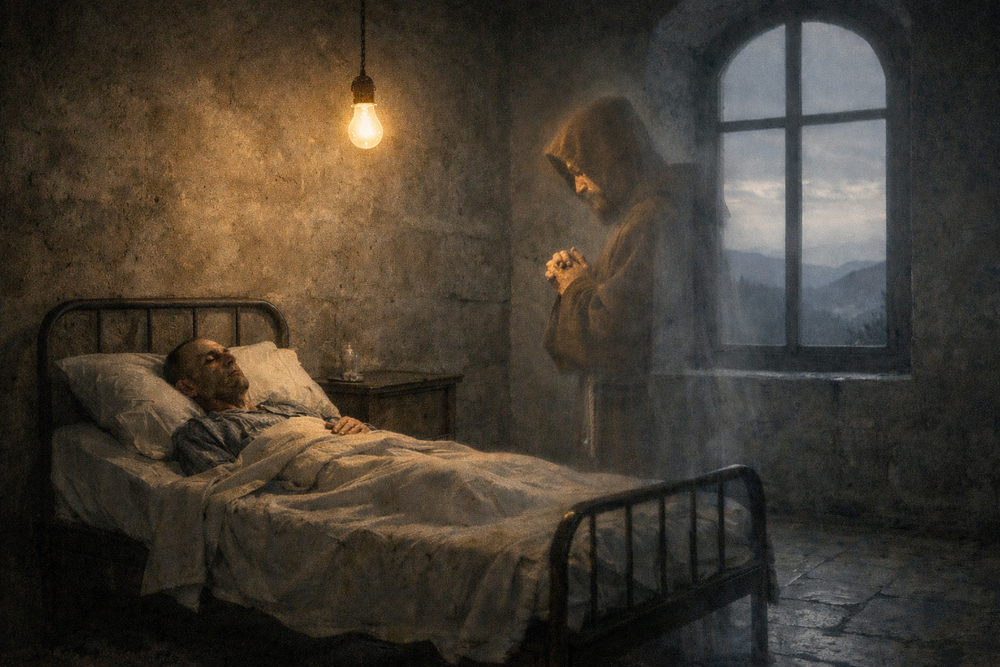
In 1956, Cardinal József Mindszenty was imprisoned in a Hungarian dungeon, isolated from the outside world by a Communist government that had spent years trying to break him. One morning, according to testimony submitted to the Vatican's beatification process, a Capuchin friar appeared in his cell. The friar had brought everything needed for Mass. The Cardinal celebrated it. They spoke. Then the friar vanished, taking everything he had brought.
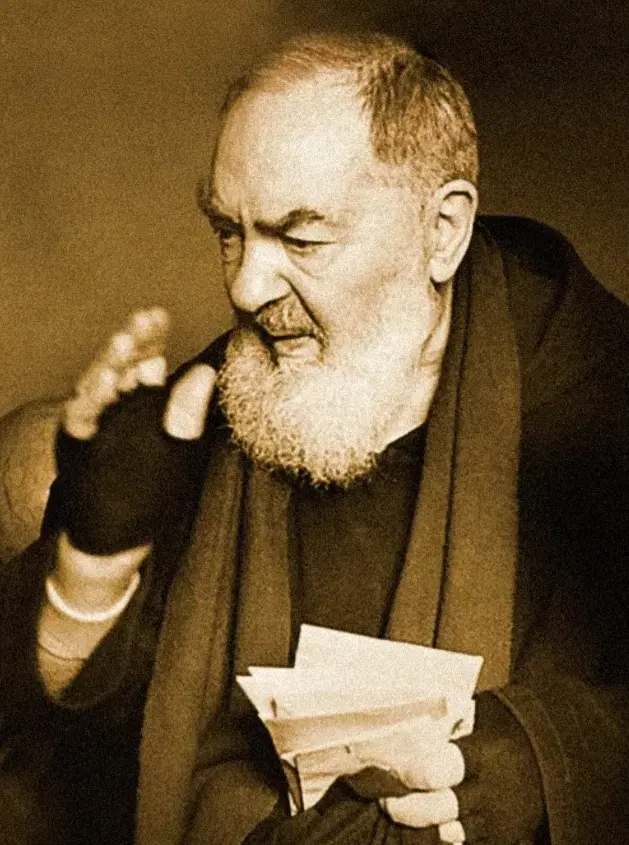
The friar was Padre Pio. At the time, Padre Pio was at his monastery in San Giovanni Rotondo, southern Italy — a place he had not left since 1918, and would not leave until his death in 1968. The testimony came from Angelo Battisti, director of the hospital Padre Pio had founded and a witness at the beatification process. It was corroborated indirectly when Padre Pio, asked about the incident by a priest who had heard rumours, confirmed it — and added a detail about the Cardinal's mistreatment that could not have been known from the outside.
Bilocation — the simultaneous confirmed presence of one person in two separate locations — sits at the most extreme edge of the phenomena this series investigates. It is also, in certain cases, the most thoroughly documented.
"He knows what he wants, knows where he goes, but he doesn't know if it's the body or the mind that goes. There is an urgency, a grave danger, a soul or a body to save."
— Padre Pio, describing the experience of bilocation, quoted in testimony submitted to the Congregation for the Causes of Saints
The standard dismissal of bilocation accounts is that they come from credulous religious sources with a vested interest in producing evidence of sanctity. That dismissal is easier to sustain before you look at the specific evidence. The Vatican's canonisation process is adversarial by design. Its investigators are looking for reasons to reject claims, not confirm them. The cases that survive it have survived a more rigorous sceptical process than most paranormal research ever faces.
The Territory
A Phenomenon Across Traditions
Bilocation is not an exclusively Catholic phenomenon, though it is most extensively documented within that tradition. Buddhist accounts describe advanced meditators projecting tulpas — secondary physical manifestations — at distances from the original body. Sufi tradition records specific saints appearing simultaneously to multiple students in different cities, with each appearance confirmed by independent parties who had no contact with one another. Tibetan Buddhist texts describe the nirmanakaya — a "created body" projected by realised practitioners. The specifics differ across traditions. The core claim — one person, two locations, confirmed simultaneously — is cross-cultural.
What makes the Western Catholic documentation uniquely useful from an investigative standpoint is its institutional rigour. The Church does not want bilocation to be real. A confirmed miracle is theologically significant and requires explanation that stretches doctrine. The Congregation for the Causes of Saints employs trained investigators who apply legal standards of evidence to witness testimony. Cases that reach the level of formal documentation have been subjected to repeated cross-examination. The witnesses have been interviewed separately, their accounts checked for internal consistency, their credibility assessed by people whose professional interest is in finding the flaw.
This matters because the alternative — that hundreds of independent witnesses across decades invented consistent, detailed, cross-checkable accounts of the same friar appearing in different places — is not a simpler explanation than the thing they described.
The Case Room
The Documented Encounters
Padre Pio's bilocation cases are the most extensively documented in modern history and offer the clearest view of what the evidence actually shows. He arrived at San Giovanni Rotondo in 1916. From that date until his death in 1968, he did not leave. The documented record is unambiguous on this point: there are no periods unaccounted for, no absences from the monastery, no gap in the continuous record of his presence there that could accommodate travel to any of the locations where witnesses reported encountering him.
The wartime cases are among the most striking. During World War II, American bombers were assigned to attack San Giovanni Rotondo while the town was behind German lines. Multiple pilots reported that when they appeared over the city and prepared to release their bombs, a brown-robed friar appeared before their aircraft. The bombs could not be released. The aircraft returned without completing the mission. Later, when an American airbase was established nearby at Foggia, one of the pilots from this incident visited the friary and found, among the friars, the figure he had seen in the air. He identified Padre Pio. This account was corroborated by multiple crew members and is recorded in formal documentation held by the Archdiocese of San Antonio, among other sources.
The Mindszenty case mentioned above is significant for a specific reason beyond the drama of its setting. The confirmation came in two stages: first through a Budapest priest who had heard the account from Mindszenty's direction and sought independent corroboration from Padre Pio; and second from Angelo Battisti, a Vatican Secretariat official with direct access to the canonisation process, who recorded Padre Pio's indirect confirmation and the detail he provided about the Cardinal's treatment — detail that was not publicly available at the time. A fabricated account would not have included checkable details that the alleged fabricator had no means of knowing.
Marchioness Giovanna Rizzani Boschi testified at the beatification process about an event from January 1905, when Padre Pio was an eighteen-year-old student in Sant'Elia a Pianisi, roughly 400 kilometres from Udine. Padre Pio's own notes from February 1905 record: "I found myself in Udine, where a father was dying and a child was being born." The Marchioness, born on 18 January 1905 in Udine, had no contact with Padre Pio and no knowledge of his notes until decades later. The dates coincide. The detail of a dying father and a newborn child matches documented events in her family. Neither party could have manufactured the corroboration the other provided.
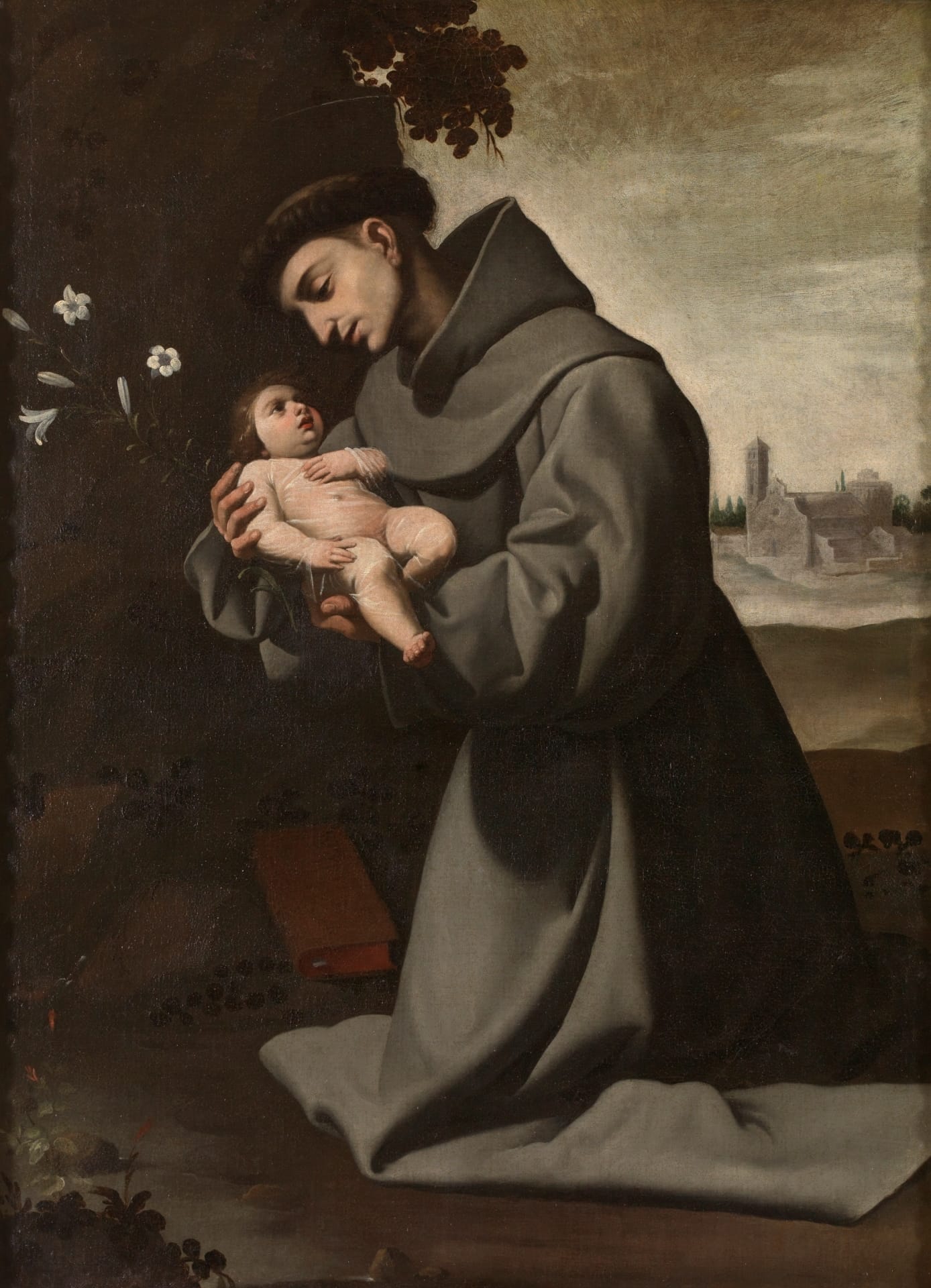
Padre Pio is not the only figure in this record. Saint Anthony of Padua is documented as appearing simultaneously in Padua and Lisbon — his physical presence in Padua during a sermon confirmed by the congregation, while his appearance at his father's unjust trial in Lisbon, where he intervened to save him, was confirmed by witnesses there. Saint Martin de Porres in Lima, Peru was documented appearing simultaneously to dying people in separate locations across the city. Saint Joseph of Cupertino, whose levitation accounts are separately documented, was reported bilocating on multiple occasions in 17th century Italy. The pattern across these cases is consistent: the bilocation occurs at moments of urgent need, the bilocated presence is purposeful and specific, and the confirmation comes from independent witnesses who had no contact with one another.
The secular record also contains cases that resist easy dismissal. Erik Erikson Gorique, an American art dealer, visited Oslo in July 1955 to purchase Norwegian glassware. Upon arriving at his hotel, the receptionist greeted him by name and informed him his room had already been reserved — by him, in person, one year earlier. The following day, his business contact greeted him as a returning acquaintance. Gorique had never previously visited Norway and had never met either person. The case is documented by paranormal researcher Rosemary Ellen Guiley in The Encyclopedia of Ghosts and Spirits (2000) and has no identified conventional explanation.
The Explanations
What Theology, Psychology and Physics Actually Say
The theological explanation — that bilocation is a gift granted by God to specific individuals for specific purposes — is internally coherent and consistent with the documented cases. It does not, however, constitute an explanation in any scientific sense. It is a framework that accommodates the data rather than accounting for the mechanism behind it. The Catholic Church itself approaches bilocation with institutional caution: it documents the evidence, does not fabricate it, and stops short of proposing a physical mechanism. That restraint is epistemically honest.
The psychological explanations are more testable and less satisfying. Mass hallucination is the most common sceptical recourse — the suggestion that witnesses, primed by expectation and religious fervour, projected the figure they expected to see. This fails on the specifics. The Mindszenty case involves a Communist dungeon, not a site of religious pilgrimage. The bomber crews were U.S. military personnel operating under combat conditions, not a congregation seeking miracles. The Oslo hotel receptionist was a secular professional with no religious connection to Padre Pio. The expectation hypothesis requires the simultaneous projection of an identical figure, with consistent detail, by witnesses with no shared cultural priming and, in several cases, no reason to project anything at all.
The more interesting secular framework is quantum non-locality — the documented phenomenon in which entangled particles influence one another instantaneously across arbitrary distances. This is confirmed physics, not speculation. Whether it has any relevance to consciousness, or to phenomena like bilocation, is a question that theoretical physicists and consciousness researchers are beginning to take seriously — and have not answered. The connection between doppelganger accounts and bilocation is worth noting: in both cases, the same person appears to occupy two physical locations, with the secondary presence described as purposeful rather than random. If there is a mechanism connecting these phenomena, it is not yet identified.
Case Summary · Key Facts
- Documented across Catholic, Buddhist, Sufi, and Tibetan traditions — independent religious frameworks arriving at the same core claim
- Padre Pio (1887–1968): formally documented bilocation cases confirmed by Vatican beatification investigators, including the Mindszenty dungeon appearance and the WWII bomber intercept
- Marchioness Rizzani Boschi case: independent corroboration between Padre Pio's private notes (1905) and a witness born in the location he described, with no contact between them
- Gorique Oslo case (1955): secular bilocation documented by Rosemary Ellen Guiley — American art dealer greeted by name in a country he had never previously visited
- Vatican canonisation process is adversarial by design — cases that survive it have been subjected to cross-examination designed to find failure
- No confirmed physical mechanism. No conventional explanation accounts for the cross-confirmed, multi-witness cases.
- Status: Unresolved
The Open Door
What the Evidence Leaves Open
The bilocation cases are the most institutionally documented phenomena in this series. They are also the most conceptually disruptive. The doppelganger is disturbing but could, in principle, be a neurological event. The Hat Man could be a product of the sleeping brain. The vardoger could be acoustic misperception or precognitive intuition. Bilocation has no neurological model, no acoustic explanation, and no psychological mechanism that accounts for the cross-confirmed, multi-witness cases.
What it has is evidence. Not perfect evidence — no single piece is unimpeachable. But a body of evidence that, taken as a whole, is harder to dismiss than any conventional explanation is to sustain. The question it leaves open is not whether something happened. The question is what kind of universe is this, that something like this can happen at all.
Padre Pio's own description is the most honest account of the experience available: he knew what he wanted, knew where he was going, but did not know whether it was the body or the mind that went. That uncertainty, from the only person ever to have described the experience from the inside, is its own kind of evidence.