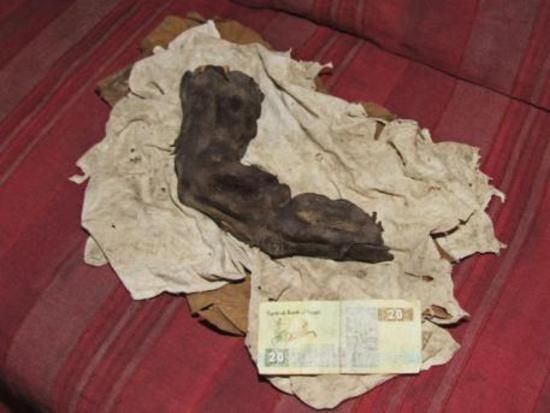
In 1988, images emerged of a 38-centimetre-long mummified finger reportedly found in Egypt. The finger, claimed to belong to an enormous humanoid creature measuring over five metres tall, was photographed and documented with an accompanying certificate of authenticity and X-ray images dating from the 1960s. Gregor Spörri, a Swiss entrepreneur, encountered the finger through an Egyptian grave robber who had discovered the artifact in an undisclosed location. Despite attempts to purchase the relic, the owner refused to part with it. By 2009, all known traces of the finger and the individual who possessed it had disappeared, leaving only the original photographs and the accompanying lore. The find has since provoked intrigue and scepticism in equal measure among researchers and enthusiasts.
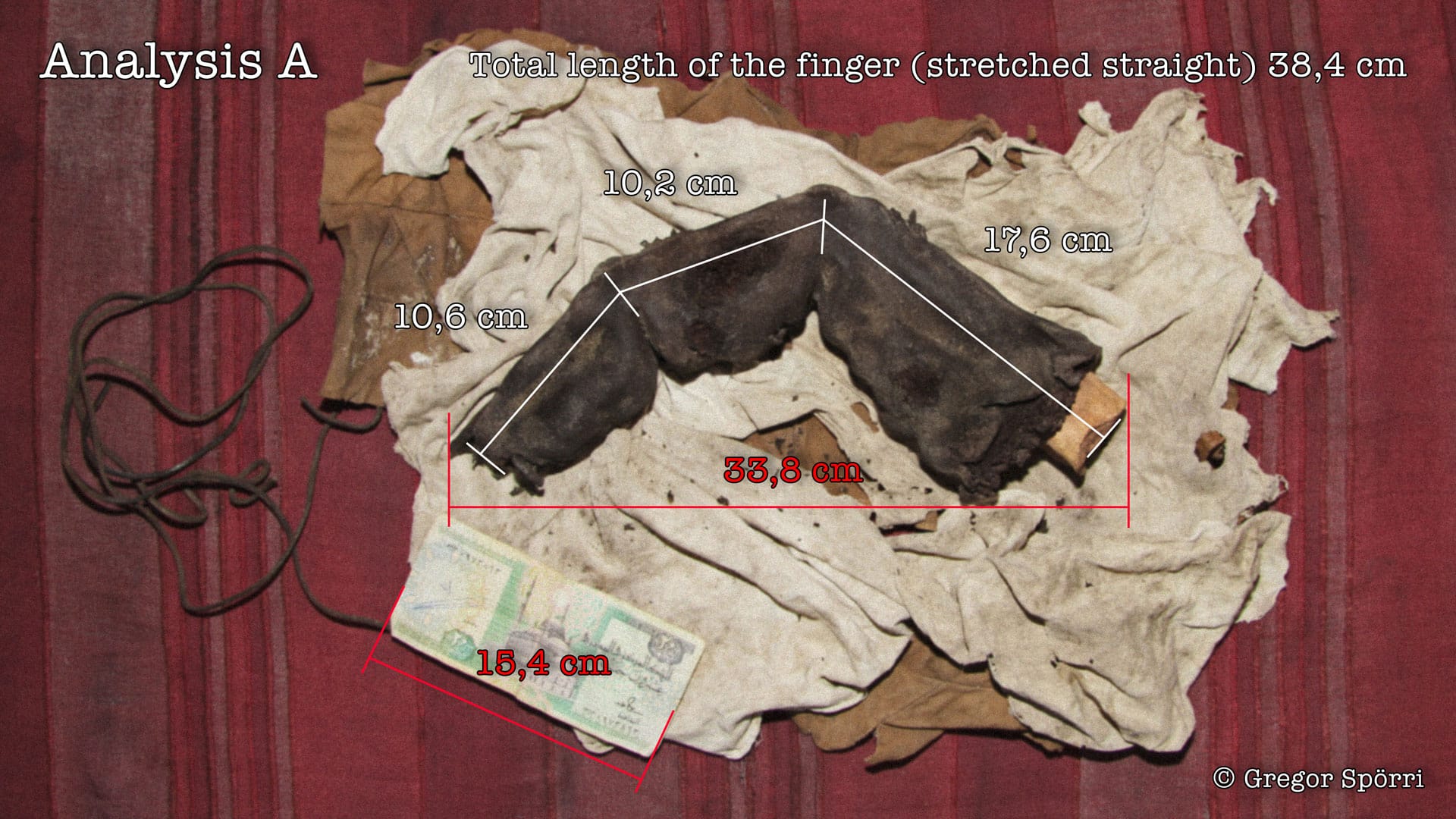
Witnesses recount the finger as distinctly humanoid in appearance, albeit far larger than any known human digit. In Spörri’s account to BILD in 2012, he described the finger being encased in a musty, oblong package and covered with dried mould. The supplied X-ray purportedly shows bone structure consistent with a finger but vastly exceeding normal human dimensions. However, the provenance of the artifact remains dubious, resting entirely on secondhand testimony and limited photographic evidence. Skeptics argue the lack of the rest of the body or additional consistent finds casts serious doubt on the finger’s authenticity. Moreover, there is no independent verification of the certificate of authenticity from recognised archaeological institutions, and the involvement of grave robbers further complicates the object’s credibility. Nevertheless, the finger aligns with biblical references to the Nephilim giant beings mentioned in Genesis and other ancient texts which some interpret as lending cultural context to such relics.
The subject of ancient giants appears intermittently in regional folklore and mythologies worldwide, with Egypt’s rich archaeological heritage providing fertile ground for such narratives. The Nephilim, described in the Hebrew Bible as offspring of “sons of God” and human women, are often invoked to explain anomalous remains or oversized bones reported in various locations. Despite numerous claims, mainstream archaeology refutes the existence of a giant humanoid species coexisting with humans, largely due to the absence of corroborative skeletal evidence and the difficulty reconciling such beings within established evolutionary frameworks. Historically, tales of giants often serve symbolic or theological functions rather than literal historical records. The alleged finger thus exists more as a controversial artefact intersecting myth, religion, and fringe speculation rather than accepted scientific consensus. Its discovery highlights ongoing tensions between extraordinary claims and the evidentiary standards demanded by archaeological methodology.
Source: Ancient Code