
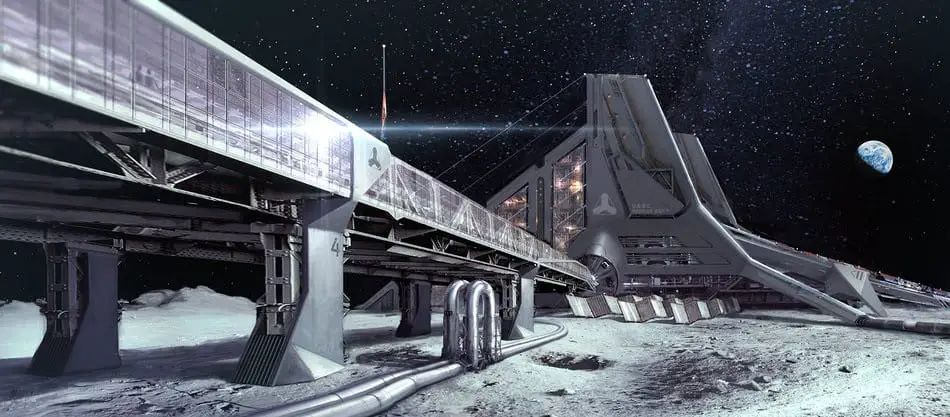
Recent discussions about the Moon’s internal structure and unusual features have reignited theories that it might be an engineered or artificial satellite rather than a natural celestial body. Scientific investigations stretching back to the Apollo missions between 1969 and 1972 revealed perplexing details that have not been fully explained. Analyses of lunar rocks and seismic data collected during these missions continue to challenge established understandings of the Moon’s formation and geology. Notably, anomalies such as a hypothesised hollow interior, unexpected elemental compositions, and behaviour resembling artificial construction have invited ongoing debate. These findings centre around locations visited during the Apollo programme and subsequent analyses by various government and independent researchers.
The Moon appears to defy straightforward geological explanation, exhibiting features inconsistent with natural satellite formation theories. Studies reveal a layered structure including a 3-mile thick outer shell of dust and rock and beneath it, a purportedly solid 20-mile thick shell composed of dense materials including titanium, uranium-236, and neptunium-237 elements rarely found in natural settings. Lunar soil samples containing rustproof iron and magnetised rocks contradict expectations given the Moon’s known lack of atmosphere and magnetic field. When Apollo 12 deliberately crashed its lunar module ascent stage onto the surface, seismometers recorded moonquakes lasting for over an hour, causing vibrations comparable to a ringing bell, a result difficult to reconcile with a solid rocky core. Scientists such as NASA’s Dr Gordon MacDonald speculated early on that the Moon might be hollow or composed of unusually light material in the interior. These inconsistencies provoke questions about the Moon’s origin and suggest it might be a construct or terraformed object.
Contextually, the Moon’s puzzling features challenge current paradigms about satellite formation and planetary geology. Conventional theory holds the Moon formed from debris after a giant impact between Earth and a Mars-sized body, explaining some features but not others, such as elemental discrepancies and lack of water. The presence of isotopes like uranium-236 and neptunium-237 further complicates matters, as these are not naturally occurring on Earth or typical in Moon rocks. Moreover, Carl Sagan pointed out that a natural satellite could not logically be hollow, raising the stakes of alternative hypotheses suggesting artificiality. Speculation about the Moon as an alien base or extraterrestrial artefact has circulated within the ufological and scientific communities alike, inspired by these anomalies. While mainstream science remains cautious, these exceptional findings warrant continued scrutiny, potentially offering profound implications for our understanding of the Earth-Moon system and planetary history.
Source: Ancient Code