| First Recorded Sighting | 1936, St. Coletta School, Jefferson County, Wisconsin |
| Primary Location | Bray Road, Elkhorn, Walworth County, Wisconsin |
| Key Witnesses | Mark Shackleman (1936), Lori Endrizzi (1989), Doristine Gipson (1991), Scott Bray (1989) |
| Physical Evidence | Claw marks in vehicle bodywork, large unidentified footprints, burial mound disturbance |
| Investigated By | Linda Godfrey, Walworth County Week / The Gazette, 1991 onwards |
| Status | Unresolved. Sightings ongoing. |
Elkhorn, Wisconsin is the kind of town that looks like it was designed to be unremarkable. It has a courthouse, a main street, a clock tower and fields that stretch away in every direction toward a flat horizon. Linda Godfrey, who worked as a reporter for the local Walworth County Week newspaper in the early 1990s, once described it as looking like a Christmas card. She had no particular interest in monsters and she had even less patience for people who claimed to have seen them.
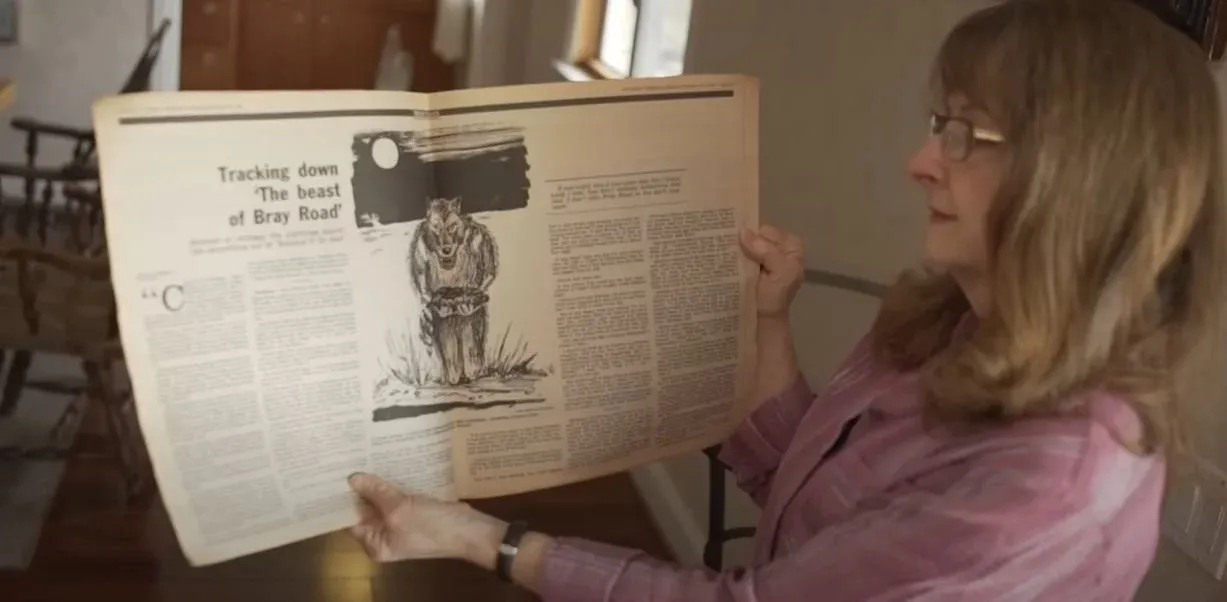
When her editor sent her to look into reports of a large wolf-like creature that had been appearing on a stretch of road east of town scaring the locals, she went expecting to file a short piece about overactive imaginations and call it done. What she found instead was a manila folder in the desk drawer of the Walworth County animal control officer. It was labelled, in neat official handwriting: "Werewolf".
That folder would eventually open into three decades worth of investigation, more than twenty books and one of the most significant bodies of canine humanoid research ever compiled. Sadly, Godfrey passed away on November 27, 2022, aged 71, after a long battle with Parkinson's disease. But the file she left behind is the starting point for any serious examination into the Beast of Bray Road and related phenomena.

Walworth County and the Christmas Card Town
To understand why the Beast of Bray Road became the most documented canine humanoid case in North America, it helps to understand the geography. Walworth County sits in the far southeast corner of Wisconsin, close enough to Chicago that the land has been gradually suburbanised at its edges while remaining deeply agricultural at its heart. The terrain is flat to gently rolling, with woodlots breaking up the cornfields and dairy farms at intervals. The Fox River runs through it and there are also several lakes in the vicinity.
It is, in other words, precisely the kind of landscape that the wider Dogman sighting record identifies as characteristic: Liminal, edge zones where forest margin meets open agricultural land, where human movement is predictable and rarely nocturnal, where the roads between scattered communities carry lone drivers through darkness at the hours when most people are asleep.
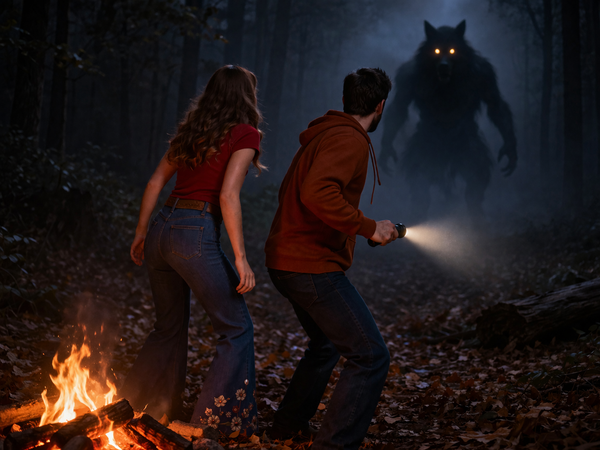
Named after a local farming family, Bray Road itself runs east from Elkhorn for approximately 4 miles until it meets the junction of the WI-11 at Bower, and is is pretty non-descript, easily forgettable, except for the fact that during the late 1980s and through into the early 1990s, this road was the focal point to a critical mass of witnesses who eventually, through the common thread of Godfrey's reporting,found each other. Once these first accounts became public, others soon surfaced and what emerged from that process was not a single sensational story but something more substantial and harder to dismiss: a pattern.
1936: The Night Watchman and the Burial Mound
The earliest documented encounter in the Wisconsin record predates the Bray Road sightings by more than fifty years and its location is one of the details that serious researchers return to most often.
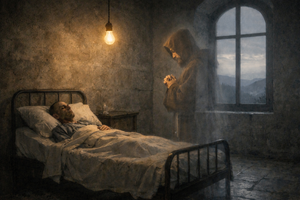
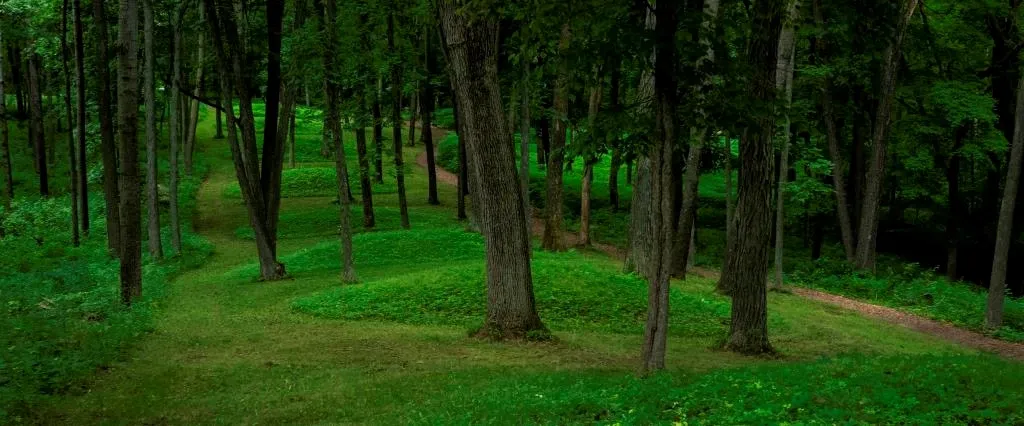
Mark Shackleman was a night watchman employed at St. Coletta School for Exceptional Children, a residential institution set in rural Jefferson County, about thirty miles north of Elkhorn. The school's grounds included several preserved Native American burial mounds, earthworks of considerable age that the institution had been careful not to disturb. One night in 1936, Shackleman noticed something on the grounds he could not account for.A large, dark figure, apparently on all fours, that was was digging into one of the mounds.
When Shackleman returned the following night,the figure was back only this, when Shackleman approached with his flashlight, stood up and faced him. Fully standing it was well over six feet tall. Shackleman reported that the creature snarled,and described the sound it produced as something between an animal growl and an altogether unnatural sound which was like nothing he had ever heard before, at the same time Shacklman decribed a terrible smell of putrid decay wash over him, before the creatue turned away and left.
Shackleman told almost nobody about what he had seen and his account remained private for decades, eventually reaching researchers only via his family, who passed it to Godfrey during her investigation of the Bray Road material. She noted the burial mound location immediately, which was the first data point in a pattern that she would spend the next thirty years documenting; that is-the consistent appearance of the creature at sites which sit at the boundary between the living world and something older. Ancient earthworks, Sacred ground, places where, in the traditions of the people who built them, the membrane between the living and the dead was understood to be at its thinnest. Whatever the Dogman is, it keeps returning to those places. Shackleman's two nights on the grounds of St. Coletta established that pattern at the very beginning of the Wisconsin record. .
The Case Room: Bray Road's Key Witnesses
The cluster of sightings that put Bray Road on the map began in 1989 and ran through the early 1990s. The following accounts are drawn from Godfrey's direct witness interviews, conducted over several years and cross-referenced across multiple conversations with each witness.
Scott Bray, 1989
Scott Bray was one of the earliest witnesses in the modern cluster. He reported seeing a large, hairy creature in a field near Bray Road that he described as bigger than a German Shepherd, with unusually long hind legs. He observed it from sufficient distance to be uncertain of the exact head shape, but close enough to be sure it was not any animal he recognised. The encounter was brief. Bray was shaken enough to report it, which put him among the first to speak on record.
Lori Endrizzi, October 1989
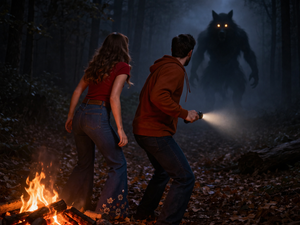
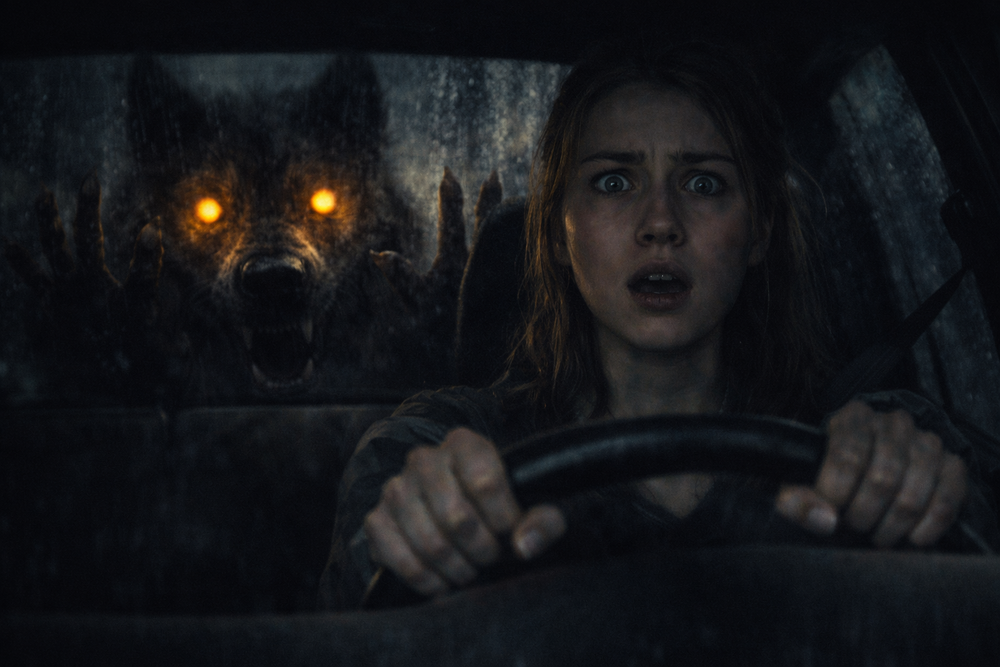
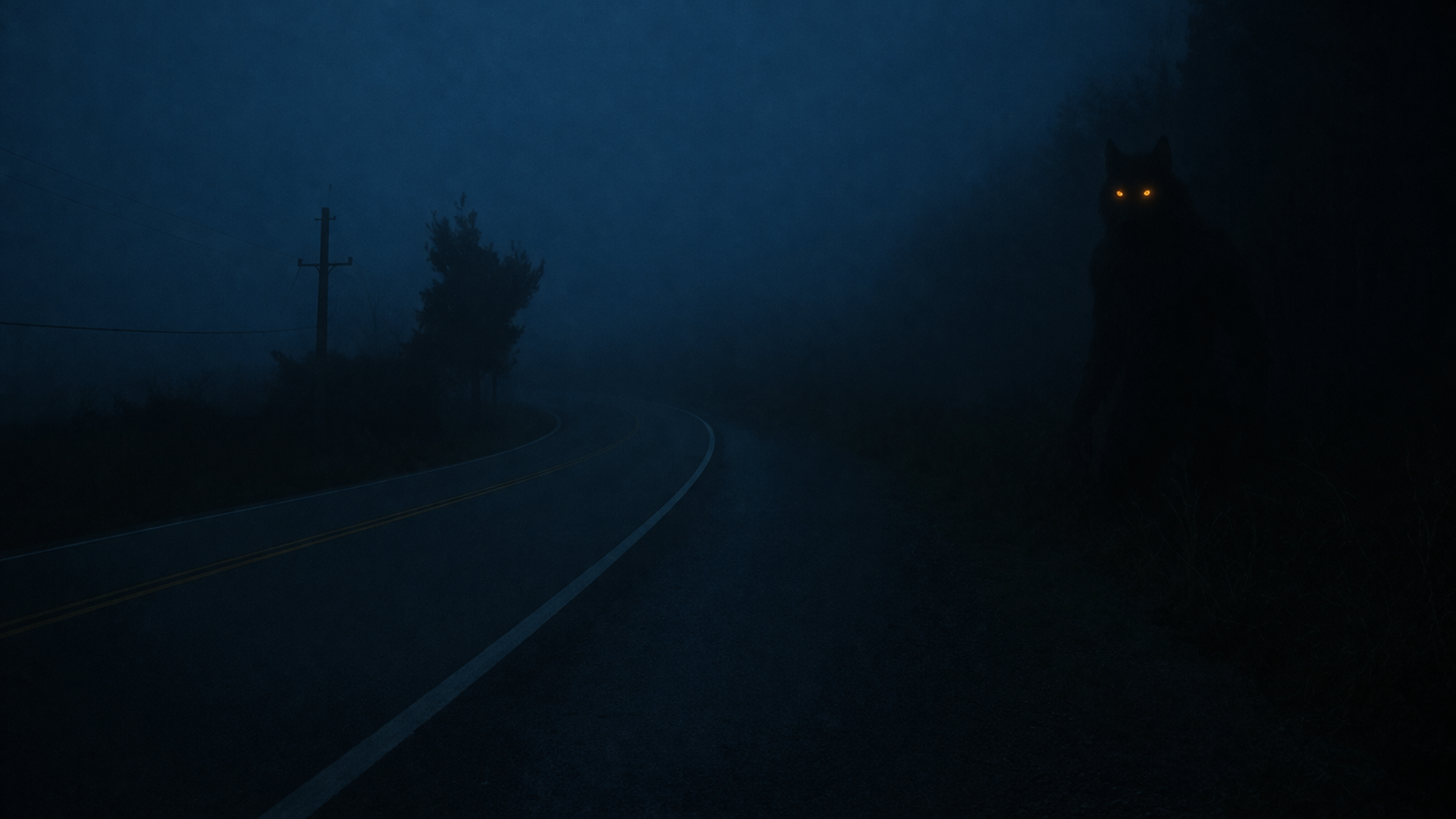
On the night of October 31st, 1989, Lori Endrizzi was driving home from a late shift at a lounge in Elkhorn. Around one-thirty in the morning, her headlights caught a shape crouched by the roadside. As she slowed, the figure rose.
She later described it to Godfrey as standing around six feet tall, covered in shaggy grey-brown fur, with a long canine muzzle, glowing yellow eyes, and hands, clawed, but proportioned more like hands than paws and holding what appeared to be roadkill with its palms facing upward. She slowed down enough to get a clear look and the creature stared back at her. She then drove away fast and did not stop until she was home.
Endrizzi was in her thirties, worked a straightforward job, and had no prior interest in the paranormal. Godfrey noted her calm demeanour across multiple interviews and the internal consistency of her account over time. She did not seek attention and filed the account reluctantly, only after hearing that others had described the same thing.
Doristine Gipson, October 1991
Two years later, on October 31st, 1991, eighteen-year-old Doristine Gipson was driving the same road when something large ran into the side of her car. She stopped and got out to investigate, only to see a large fur-covered creature rising from the ground where it had apparently been struck. The creature charged toward her causing Doristine to hurridly get back in the car. As Gipson accelerated away in the rain, the creature jumped onto the boot of her vehicle, clung on for a short time before eventually sliding off and disappearing in the darkness behind her. When the terrified Doristine arrived home, her family examined the car and found several gouges in the bodywork consistent with large claws. Multiple family members witnessed the damage.
The Gipson account is the most physically evidenced encounter in the Bray Road file. The claw marks were seen by independent witnesses immediately after the event and before any media coverage had begun.
Later Accounts: 1990s to Present
The accounts did not stop when media interest peaked. A dairy farmer reported finding his cattle disturbed and observing a large upright figure at the field boundary. On another occasion, a woman was driving on nearby Bowers Road and described a creature that stood up from a crouching position beside the road and subsequently run alongside the moving vehicle, matching her car's speed before eventually falling behind. In another instance recorded in 1992, two witnesses were driving together and both observed an upright figure crossing the road ahead of them; they both descibed the event independently (and without knowledge) of each other some years afterwards; their descriptions of the creature and detailed accounts of the incident remained identical.Documented Dogman encounters have continued to be reported throughout the 2000s and into the 2010s. The latest incidents being the Spring Prairie account from 2018 and the Lyons account from 2020 both of which sit in the same geographic location and descriptive tradition.
- First documented account: 1936, Jefferson County. Night watchman observes large bipedal figure digging in Native American burial mound over two consecutive nights
- Modern cluster: Bray Road, Elkhorn, 1989 to 1992. Multiple independent witnesses with no prior connection to one another
- Lori Endrizzi, October 1989: close-range visual encounter, creature standing upright holding roadkill with palms upward, glowing yellow eyes, grey-brown fur
- Doristine Gipson, October 1991: creature struck her moving vehicle, jumped on the boot, claw marks in bodywork subsequently witnessed by family members
- Investigated on the record by journalist Linda Godfrey from 1991, leading to three decades of field research and more than twenty published books
- Walworth County animal control maintained a folder labelled "Werewolf" containing reports predating Godfrey's investigation
- Sightings continue: accounts documented in Spring Prairie (2018) and Lyons (2020)
- No confirmed DNA, body, or unambiguous photograph has been produced
- Sighting locations correlate with ancient Native American burial and effigy mound sites — a pattern consistent with the broader Dogman record across the Midwest
A Journalist Investigates
Linda Godfrey's role in the Bray Road story is unusual enough to warrant its own section, not because she was a believer who went looking for the evidence of her monster, but because she was a hard working honest local newspaper reporter doing a job, and found something she had not gone looking for, only to spent the rest of her working life trying to understand it.
Godfrey was assigned the story in 1991 by her boss, the editor of the Walworth County Week, who expected her to write something lightly sceptical and move on. Instead, she interviewed the witnesses, found them to be credible and internally consistent, and filed a straight news story. The story ran on December 29, 1991, and noone would have predicted the response, which was immediate and sustained; calls, letters, more witnesses came flooding in - Godfrey did not stop taking calls for thirty years.
What made Godfrey's work valuable was not enthusiasm but her method. She kept meticulous records, cross-referencing accounts, noted where descriptions diverged as carefully as where they agreed. It was Godfrey who identified the burial mound correlation, independently and before any other researcher had mapped it systematically.She interviewed witnesses years apart and compared the consistency of their accounts over time. She was, in the most literal sense, a journalist applying journalistic standards to an anomalous subject and her files are consequently more reliable than almost any other body of material in the wider cryptozoology field.
She described herself, in later interviews, as a folklorist navigating the boundary between legend and witnessed reality, which is That an honest description of a difficult position, and it reflects the intellectual care she brought to material that could easily have been handled sensationally but was not.
The Pattern: Burial Mounds, Edge Zones, and the Wider Corridor
The Bray Road case does not sit in isolation. It is the most documented node in a geographic pattern that extends across southeastern Wisconsin and into the broader Midwest, and that pattern contains several features which are difficult to account for if the Beast of Bray Road is simply a misidentified animal ranging through agricultural land.
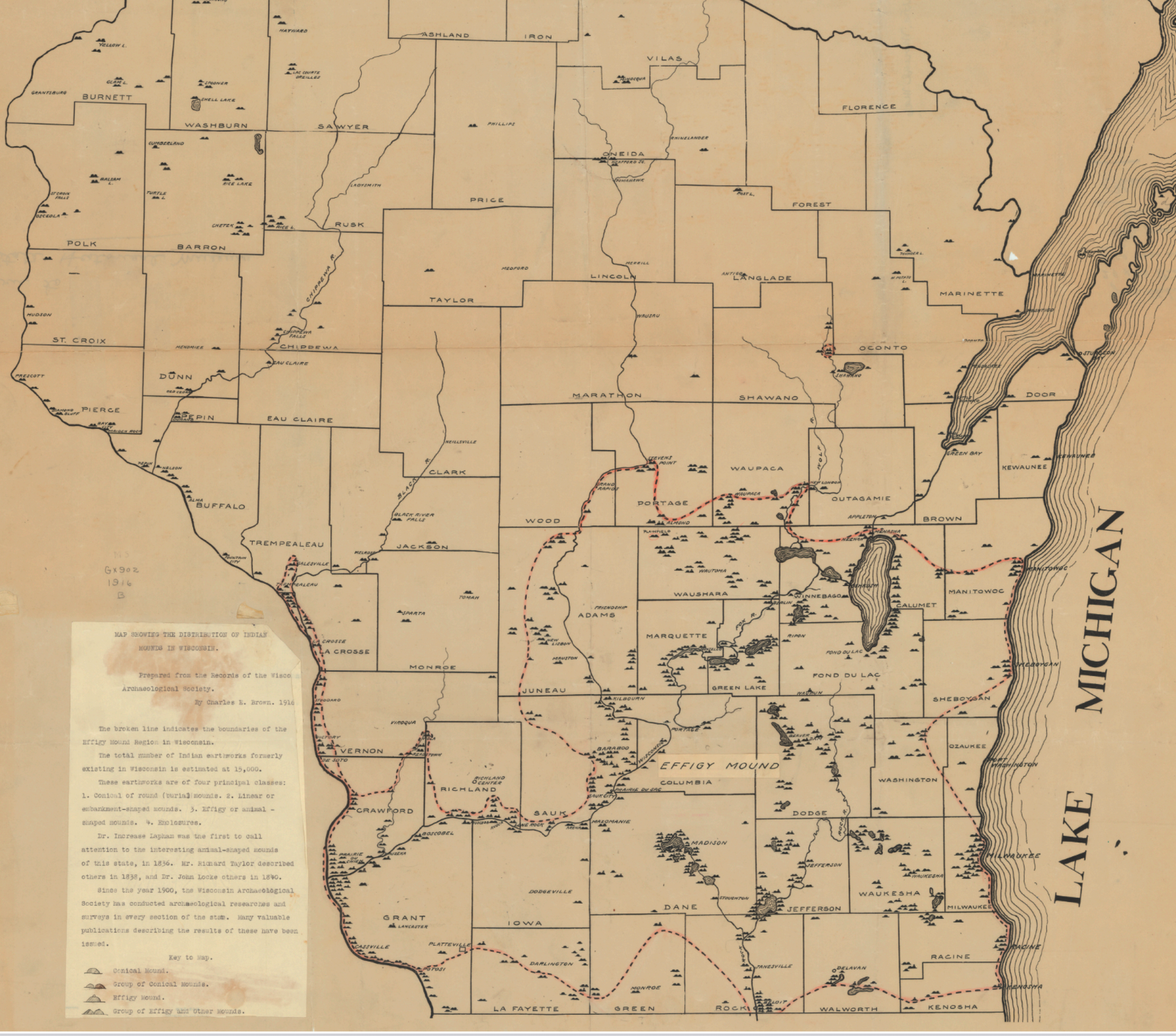
The burial mound correlation is the most striking. The 1936 Shackleman encounter occurred at a site with preserved Native American mounds. Linda Godfrey, after accumulating several hundred witness accounts, identified a consistent clustering of sightings near effigy mound locations throughout Wisconsin and the Lake Michigan shoreline. The Traverse City area of Michigan, which has one of the highest concentrations of ancient mounds in the Great Lakes region, also has one of the highest concentrations of Dogman reports. This correspondence between spiritually significant indigenous geography and sighting hotspots has been documented independently by multiple researchers and holds across a significant enough dataset to be something other than coincidence.
The edge zone pattern is the second structural feature. The majority of encounters, in the Bray Road file and across the wider Dogman record, occur not in deep wilderness but at margins: where forest meets farmland, where road meets treeline, where settled land transitions to wild. A pure biological predator would be expected to range through deep cover and emerge into open ground only under pressure. The consistent appearance of the Beast of Bray Road at boundary zones, at roads through agricultural land, in the transition between cornfield and woodlot, suggests either a predator unusually tolerant of human proximity or something whose relationship to geographic boundaries is more complex than simple hunting behaviour.
Looking for Explanations
The sceptical case for the Bray Road accounts rests primarily on three arguments: misidentification of known animals, the social contagion of witness accounts once the first report becomes public, and the involvement of hoaxers in a small number of cases.
The misidentification argument has genuine force for some accounts. Southeastern Wisconsin has a recovering gray wolf population. Black bears are present in the state. A mangy bear or a large wolf observed briefly in poor light at the edge of a field can look, to an unprepared observer, quite different from a healthy specimen. Godfrey herself acknowledged this in print and factored it into her assessment of the overall record.
It does not, however, account for the Endrizzi encounter. Lori Endrizzi was stationary in a vehicle with headlights on, observing a figure from a distance of approximately six to eight feet and for long enough to describe its hand position, the direction its palms faced, the colour of its eyes, the texture of its fur, and the specific way it moved its head to look at her. A wolf does not hold roadkill in its upward-facing palms. A bear does not have a muzzle of the length she described at the distance she was observing it. The misidentification hypothesis, whatever its general usefulness, does not dispose of the closest and most detailed accounts in the file.
The social contagion argument, the idea that once Godfrey's 1991 article appeared, witnesses began constructing or embellishing accounts to fit the emerging template, is addressed by the chronology. The Endrizzi account, the Gipson account, and several others predate the article. The Shackleman account predates it by fifty-five years. The folder in the animal control officer's drawer existed before Godfrey arrived to open it.
The absence of physical evidence; no body, no confirmed DNA, no unambiguous photograph, remains the sceptic's strongest ally and should not be minimised. A biological creature generating this volume of sightings over this time period should leave more recoverable material than has been found. This is a genuine problem for the biological species hypothesis, and it is one of the reasons some researchers have moved toward non-biological frameworks in their later thinking.
There is a third framework that the more rigorous end of the research community has begun to take seriously, and which the Bray Road material does not entirely resist. A subset of witnesses describe the creature not simply appearing from cover but seeming to arrive and depart in ways that do not correspond to the movement of a large animal through terrain. Godfrey herself received accounts in which the creature was observed to simply vanish in open ground with insufficient cover to conceal something of its size, and others in which witnesses reported a sudden and overwhelming sense of presence before the creature became visible at all, as though perception preceded physical manifestation. These details sit awkwardly in any biological framework.
Researcher John Keel, whose ultraterrestrial hypothesis proposed that certain anomalous phenomena operates at the boundary of physical reality rather than within it, would have recognised the pattern that Godfrey identified immediately. So would the indigenous traditions of the people who built the very mounds which feature so frequently in the sighting record, traditions in which certain beings are understood not as animals existing in the local environment but as supernatural guardians or entities associated with specific sacred sites, capable of being encountered but not tracked, seen but not followed. Across the full breadth of the witness record the Dogman of Bray Road does not behave, like a creature that lives in the woods, rather it behaves, in certain accounts at least, like something that is passing through, associated but not attached.
Linda Godfrey's Conclusions
Godfrey spent thirty years studying the bray road phenomenon and was closer to this material than almost any other researcher. Her conclusion, which she reached carefully and stated honestly in her later work, was that it was highly probable not everyone was witnessing the same thing. Some witnesses, she believed, were likely encountering a genuine physical animal of unknown classification. Others may have been encountering something whose nature was not straightforwardly biological and A small number may have been misidentifying known animals or hoaxing.
It is not a tidy conclusion and does not close the file. But it is the conclusion produced by three decades of serious investigation by someone who arrived as a sceptic and never entirely abandoned that scepticism. The field is significantly poorer for her absence.
Verdict
The Beast of Bray Road is not a legend in the sense of a thing invented and embellished over time. The witness record is too independent, too consistent, and too expansive for this explanation to hold for anyone but the most cynical of sceptics. Something has been encountered in Walworth County and the surrounding area across nine decades by people with no evident motive to fabricate and no prior connection to one another.
What that something is, the file cannot definitively determine. The biological species hypothesis faces the problem of missing physical evidence. The misidentification hypothesis faces the problem of Lori Endrizzi, whose close-range account is detailed and consistent enough to resist easy dismissal. Non-biological frameworks, which Godfrey herself gave serious consideration in her later work, remain in the territory of serious speculation rather than demonstrated evidence.
The most honest assessment is simply this: the Beast of Bray Road is a genuine, ongoing, unresolved phenomenon in a specific stretch of southeastern Wisconsin. The file is thick. The witnesses are credible. The explanation is not yet forthcoming.
Primary Sources
- Godfrey, Linda S. The Beast of Bray Road: Tailing Wisconsin's Werewolf. Prairie Oak Press, 2003.
- Godfrey, Linda S. Hunting the American Werewolf. Trails Books, 2006.
- Godfrey, Linda S. Real Wolfmen: True Encounters in Modern America. Tarcher/Penguin, 2012.
- Godfrey, Linda S. American Monsters: A History of Monster Lore, Legends, and Sightings in America. Tarcher/Penguin, 2014.
- Godfrey, Linda S. Original reporting, Walworth County Week, December 29, 1991. Reprinted in: The Beast of Bray Road, Appendix A.
- Owen, Robert Dale. Footfalls on the Boundary of Another World. J.B. Lippincott, 1860. (Cited for parallel methodology in anomalous witness documentation.)
- North American Dogman Project witness database: northamericandogmanproject.com
- Dogman Encounters Radio archive: dogmanencounters.com
- Wisconsin Historical Society. Distribution of Indian Mounds in Wisconsin (c.1916). Wisconsin Historical Society Digital Collections. The map documents the concentration of burial and effigy mound sites across southeastern Wisconsin, directly corresponding to the geographic sighting corridor identified by Linda Godfrey and subsequent researchers. Available at: Wisconsin Historical Society Digital Collections
The Dogman Files — Case File Series
- Not a Werewolf: The Dogman Rabbit Hole — the full overview investigation
- Case File 01: The Beast of Bray Road — you are here
- Case File 02: The Land Between the Lakes
- Case File 03: The Michigan Dogman and the Gable Film
- Case File 04: Black Shuck and the British Canine Tradition — coming soon
- Case File 05: The Skinwalker Connection — coming soon
Frequently Asked Questions
Is the Beast of Bray Road the same as the Dogman?
The Beast of Bray Road is the most documented regional case within the broader Dogman phenomenon. The physical description is consistent with Dogman reports from Michigan, Kentucky, and elsewhere. Researchers generally treat the Beast of Bray Road as a location-specific name for the same class of creature rather than a separate entity.
Where exactly is Bray Road?
Bray Road runs east from the town of Elkhorn in Walworth County, Wisconsin, through agricultural land and scattered woodland. It is a public road and has become a minor destination for enthusiasts, though the surrounding farmland is private property and should be respected as such.
What happened to Linda Godfrey?
Linda Godfrey passed away on November 27, 2022, aged 71, after a long battle with Parkinson's disease. She was born in Madison, Wisconsin in 1951 and spent three decades as the primary investigative researcher of the Beast of Bray Road and canine humanoid phenomena. She authored more than twenty books and appeared on numerous television and radio programmes. The field of cryptozoology lost one of its most rigorous and humane practitioners.
Has anyone been harmed by the Beast of Bray Road?
No confirmed injuries have been attributed to the creature. The most physically charged encounter in the documented record is Doristine Gipson's 1991 account, in which the creature made contact with her moving vehicle and left claw marks in the bodywork. No direct attack on a person has been documented in the Bray Road file.
Could it be a known animal?
For some accounts, misidentification of wolves, bears, or large dogs remains a plausible explanation. For the closest and most detailed encounters, including Lori Endrizzi's 1989 account, the misidentification hypothesis does not adequately account for the specificity and consistency of what was described. Southeastern Wisconsin has a recovering gray wolf population, which researchers on both sides of the debate take into account.
Are there still sightings on Bray Road?
Yes. Documented accounts from Spring Prairie in 2018 and Lyons in 2020 indicate the phenomenon has not resolved. The North American Dogman Project continues to compile and assess new reports from Walworth County and the surrounding region.
Is there any physical evidence?
The claw marks on Doristine Gipson's vehicle in 1991, witnessed by her family, are the most concrete physical evidence in the primary record. No DNA, confirmed track casts, or photographic evidence meeting scientific evidentiary standards has been produced from the Bray Road cases.
Why do sightings cluster near burial mounds?
The correlation between Dogman and Beast of Bray Road sightings and the locations of ancient Native American burial and effigy mounds has been documented by Linda Godfrey and other researchers across a dataset large enough to be statistically significant. The 1936 Shackleman encounter, in which the creature was found digging into a burial mound, established this pattern at the very beginning of the Wisconsin record. Whether it reflects indigenous spiritual traditions, genuine geographic patterns of behaviour, or something else has not been resolved.
Related files: Not a Werewolf: The Dogman Rabbit Hole | The Land Between the Lakes Case File | The Michigan Dogman and the Gable Film Case File | Black Shuck and the British Canine Tradition: Case File | The Skinwalker Connection: Case File