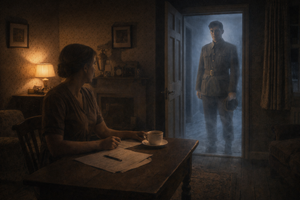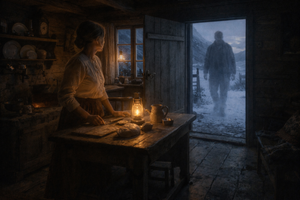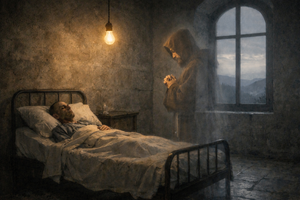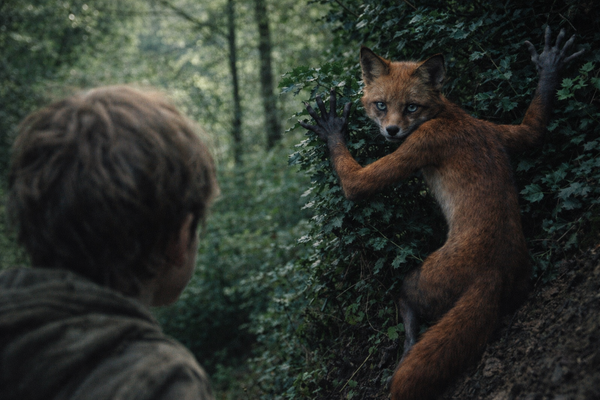
There is a question at the heart of the paranormal that most investigators refuse to ask directly, because the answer it points toward is stranger than anything that a nuts-and-bolts spacecraft from a distant star system could ever provide. The question is this: what if the craft people see in the sky, the enormous hairy figures glimpsed at the edge of forests, the shadow beings in bedrooms, the luminous orbs over Norwegian valleys, the Djinn of Islamic tradition, the fairy abductions of medieval Europe, and the terrifying bedroom visitors of the modern alien encounter experience are not different phenomena at all? What if they are one phenomenon, wearing different costumes in different centuries, shaped by the expectations of whoever it chooses to confront?
This is not a fringe position. It is the considered conclusion of two of the most intellectually serious researchers the UAP field has ever produced, and it is being reinforced, from an unexpected direction, by twenty-first century plasma physics.
The End of the Extraterrestrial Hypothesis
John Keel arrived at his conclusions the hard way. In the mid-1960s he spent years conducting fieldwork across the United States, following up sighting reports, interviewing witnesses, and attempting to find the pattern beneath the phenomenon. What he found was not a pattern consistent with reconnaissance by a technologically advanced species from another solar system. What he found was something considerably more troubling.
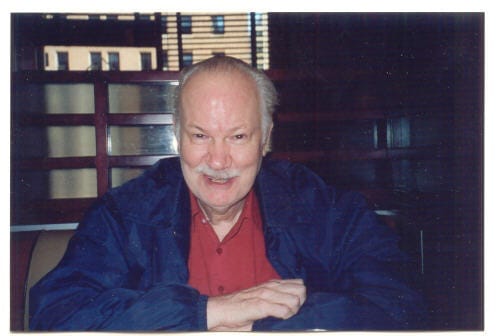
John Keel abandoned the extraterrestrial hypothesis in 1967 after years of field investigations convinced him that the phenomenon was indigenous to Earth and had been present throughout human history. His concept of ultraterrestrials remains one of the most unsettling frameworks in the literature.
The objects witnesses described did not behave like craft. They changed shape. They appeared and disappeared without any transition. They interacted with observers in ways that seemed almost theatrical, as if they were aware of being watched and were performing accordingly. They triggered psychological effects, physical ailments, and prophetic experiences in people who encountered them. And they showed up, with suspicious regularity, alongside other phenomena that had no business being in the same location as a nuts-and-bolts spacecraft: apparitions, poltergeist activity, encounters with entities that matched no coherent biology, and a persistent sense reported by witnesses that the encounter was not happening entirely in the physical world as they understood it.
By 1967, Keel had abandoned the extraterrestrial hypothesis entirely. The objects and apparitions he was documenting, he concluded, did not originate on another planet and might not even exist as permanent constructions of matter. He proposed instead that humanity shares this planet with a non-human intelligence that has been present for the entirety of recorded history and possibly far longer, an intelligence he termed ultraterrestrials, entities that exist in what he called a superspectrum of electromagnetic energy invisible to human senses but capable of manifesting within the perceivable world when conditions allowed or when the intelligence chose to make itself known. This thing, whatever it was, was not visiting. It had never left.
Vallée and the Control System
Working from a different direction but arriving at a remarkably similar destination, Jacques Vallée was reaching his own conclusions in the same period. Vallée had spent years applying rigorous statistical analysis to UAP reports, and what disturbed him was not the strangeness of individual cases but the patterns he found across thousands of them. The behaviour of UAP occupants, when documented carefully, did not resemble explorers or scientists conducting systematic study of an unfamiliar planet. It resembled something more like theatre. Witnesses reported being given objects that later disappeared. They were told things that turned out to be false. They were subjected to apparent tests or rituals that served no obvious scientific purpose. The encounters left physical traces that were genuine but somehow also insufficient, always just enough to tantalise but never quite enough to constitute proof.

Jacques Vallée's Passport to Magonia, first published in 1969, remains the foundational text for the argument that UAP encounters are not a modern phenomenon but a continuous thread running through all of human history, adapting its costume to fit the mythology of each era.
In Passport to Magonia, published in 1969, Vallée pointed to something that should have been obvious but had been consistently overlooked: the stories people were telling about their encounters with the occupants of unidentified craft were structurally identical to stories that pre-industrial European cultures had told for centuries about encounters with the fairy folk. The same small humanoid beings. The same luminous craft described as aerial ships or flying islands. The same abductions into a realm outside normal time, accompanied by the same warnings about food and the same disorientation upon return. The same transactions in which the visitor receives something and is changed by the encounter in ways that are simultaneously real and impossible to verify. Medieval peasants described their encounters in the language available to them, which was the language of folklore and the supernatural. Modern witnesses describe their encounters in the language available to them, which is the language of space travel and extraterrestrial biology. The phenomenon itself, Vallée argued, had not changed. Only the cultural costume it wore had changed, adapted precisely to the expectations of whoever was experiencing it.
This led Vallée to his most disturbing conclusion, which he called the control system theory. The phenomenon, he argued, functions as a control mechanism for human belief and behaviour. It does not simply appear. It appears in ways specifically calibrated to reinforce or destabilise particular belief structures at particular historical moments. The mystery airships of 1897 appeared precisely when the idea of powered flight was entering human imagination. The flying saucers of the 1940s and 1950s appeared precisely when space travel became a cultural possibility. The bedroom abduction phenomenon intensified at precisely the moment when genetic engineering and reproductive technology entered public consciousness. Whatever this intelligence is, it reads the room, and it has been reading it for a very long time.
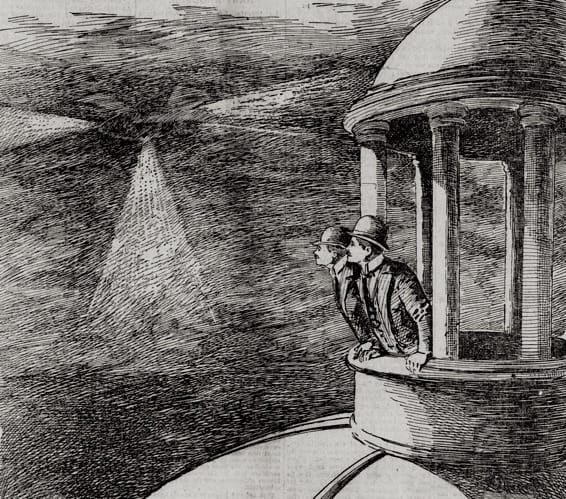
A contemporary newspaper illustration of one of the mystery airships reported across the United States between 1896 and 1897, years before powered flight was possible. Thousands of witnesses described large cigar-shaped craft with brilliant searchlights moving silently overhead. Jacques Vallée noted that the airships appeared at precisely the moment when the idea of powered flight had entered the public imagination — the phenomenon, as always, wearing the costume its audience would find most plausible.
A Dog in the Forest That Should Not Exist
To understand why these ideas have become newly urgent, it helps to spend time with the reported encounters that conventional cryptozoology cannot adequately explain. The Dogman reports that have emerged with increasing frequency across the United States and increasingly in the UK present a genuinely anomalous profile. Witnesses consistently describe a bipedal canine entity of enormous size, often reported at between six and eight feet tall when standing, exhibiting intelligence and apparent awareness of the observer that distinguishes it sharply from any known animal. So far this might simply suggest an unclassified primate or an exaggerated account. But the high-strangeness elements that accompany a significant proportion of Dogman reports place them in a different category entirely.
A witness in Michigan in the early 2000s described seeing a Dogman figure at the edge of a wood, making sustained and apparently knowing eye contact, and then watching it step backward into a darkness that seemed to open behind it like a seam, after which it was simply not there. No undergrowth moved. No sound followed. The darkness did not close. It simply ceased to be the focus of whatever had just occurred. In multiple independent reports, Dogman encounters are accompanied by the same electromagnetic anomalies that characterise UAP encounters: electronics failing, vehicle engines cutting out, a strange localised silence in which ambient sound disappears. Several researchers have noted that Dogman sightings cluster in the same geographic zones as UAP sightings and other high-strangeness events, what Keel termed window areas, locations where the membrane between whatever produces these phenomena and the perceivable world appears, for reasons that remain entirely unclear, to be thinner than elsewhere.
The same anomalous profile appears in a significant proportion of Bigfoot reports, a detail that the flesh-and-blood faction within cryptozoology has always found uncomfortable. There are too many accounts of luminous orbs accompanying Sasquatch sightings, too many cases in which the creature leaves tracks that simply stop in open ground without any physical explanation, too many witnesses describing a sense that the encounter was not entirely physical in nature, for the unknown primate hypothesis to account for the full range of the data. Joshua Cutchin's careful research in Where the Footprints End documented the overlap between Bigfoot reports and the same folkloric and paranormal elements that Vallée found in UAP encounters: the trickster quality of the entity, the physical evidence that is genuine but somehow never quite conclusive, the psychological and physiological effects on witnesses that persist long after the encounter.
Patrick Harpur and the Daimonic
The most philosophically sophisticated attempt to account for all of this within a coherent framework belongs to the British writer Patrick Harpur, whose 1994 work Daimonic Reality has slowly accumulated the status of a quietly essential text among researchers willing to think outside the nuts-and-bolts paradigm. Harpur drew on ancient Greek philosophy, Neoplatonism, and the psychology of Carl Jung to propose that what we are encountering in these events are daimons, entities that exist on the threshold between the physical world and what he calls the Otherworld, the vast, non-rational dimension of reality that the modern West has systematically denied but which every other culture in human history has taken as a given.
The daimon, in Harpur's framework, is neither purely physical nor purely psychological. It is genuinely real but not literally real in the way a stone or a table is literally real. It inhabits what he calls the imaginal realm, a term drawn from the Islamic philosopher Henry Corbin's concept of the mundus imaginalis, a dimension of being that is objective, not merely subjective, but accessible only through imagination and encounter rather than through empirical measurement. The daimon is a shapeshifter by nature. It presents itself in the form that the culture and psychology of the witness will find most meaningful or most disturbing, which is precisely why the medieval peasant sees a fairy and the modern American sees a Grey, and why both encounters share identical structural features despite their superficially different appearance.
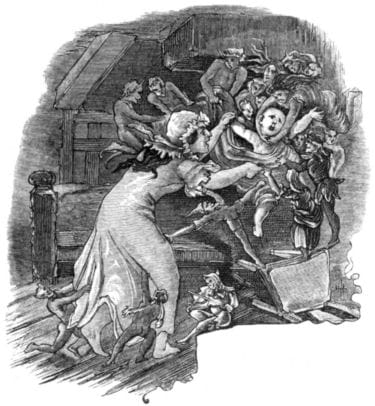
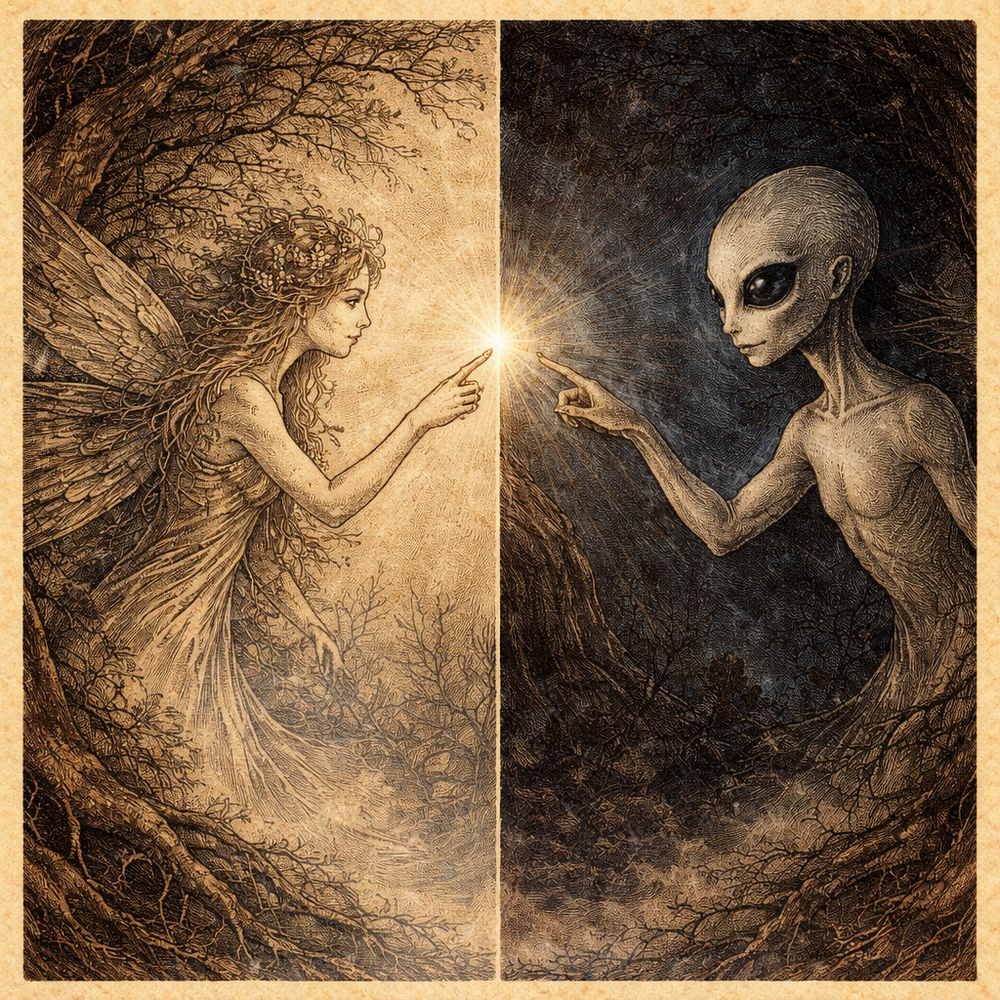
Medieval and early modern accounts of abduction by fairy folk share structural features with modern alien encounter reports that are impossible to explain by coincidence: the luminous craft, the beings of small stature,abductions, the loss of time, the sense of a realm outside normal reality, and the return of a witness permanently changed. Vallée documented hundreds of these cases in Passport to Magonia.
Harpur's most important observation, and the one that most directly confronts the sceptical position, is that the daimonic does not wish to be caught. The elusiveness of the phenomenon, the way physical evidence is always present but never conclusive, the way encounters are always witnessed but never cleanly documented, is not a function of the phenomenon's non-existence but of its nature. The daimonic is inherently liminal, existing in threshold states, at the edges of forests and fields, at dusk and dawn, in the border territory between sleep and waking. It leaves traces precisely calibrated to suggest its reality without confirming it. This is not a limitation we might overcome with better cameras or more rigorous protocols. It is what the phenomenon is.
The Djinn and the Oldest Trickster
The Islamic tradition of the Djinn offers perhaps the most ancient and the most coherent pre-modern framework for what Keel, Vallée and Harpur have been attempting to describe. The Djinn are neither angels nor demons in the Islamic cosmology. They are a separate order of creation, beings made of smokeless fire or plasma who inhabit the same world as humans but in a different register of reality, invisible under ordinary conditions but capable of manifestation, interaction, and occasionally possession of the physical world. They are characterised throughout the classical literature of Islam by precisely the qualities that characterise the phenomenon as documented by modern researchers: shapeshifting, trickery, a capacity to assume human or animal form, a profound ambiguity about their intentions, and an interaction with human consciousness that is simultaneously more intimate and more aloof than any encounter with a physical being could be.
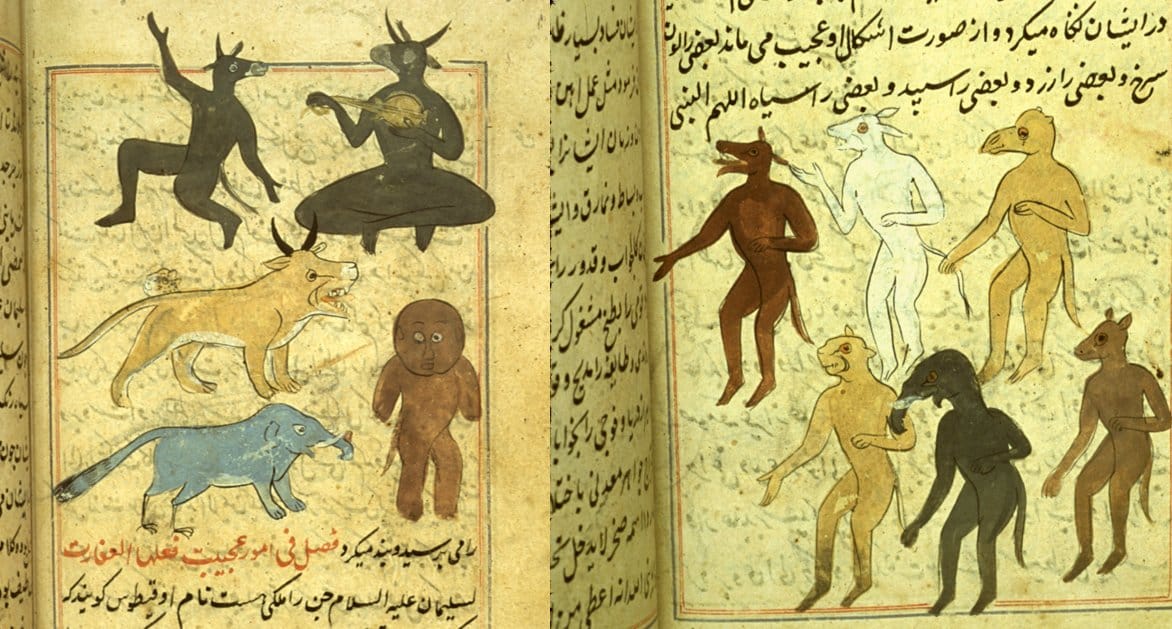
The Islamic tradition describes the Djinn as beings of smokeless fire, a separate order of creation sharing the world with humanity but in a different register of reality. Their classical characteristics — shapeshifting, electromagnetic interference, specific location attachment, interaction with human consciousness — map with striking precision onto the profile of the phenomenon as documented by contemporary researchers. .
The suggestion that the Djinn may be understood in terms of plasma physics, advanced most notably by the researcher Rosemary Ellen Guiley in her later work, is not as far-fetched as it might initially sound. The classical descriptions of Djinn as beings of smokeless fire map with surprising precision onto the properties of plasma, the fourth state of matter, a state in which ionised gas exhibits self-organising, apparently directed behaviour that can interact with electromagnetic fields in ways that no conventional gas would. The interaction between Djinn encounters and electromagnetic anomalies in classical accounts, the way they are associated with specific locations, the reports of physical sensation in their presence, all become somewhat less opaque when considered through this lens, even if the lens itself remains speculative.
The Hessdalen Lights and the Question of Plasma Intelligence
In a small valley in rural central Norway, something has been appearing in the skies since at least the 1930s. The Hessdalen lights, documented by scientists from multiple disciplines since 1983, are measurable, photographable, and entirely unexplained. They manifest as self-illuminated plasma structures that move with purpose, change direction, accelerate from rest to extraordinary speeds, and occasionally interact with observers in ways that suggest awareness. They are neither hallucinations nor swamp gas. They produce radar returns, they affect electronic equipment in their vicinity, and they have been filmed by researchers from the Italian National Research Council and Norway's Østfold University College exhibiting behaviour that the prevailing physical models cannot account for.
What makes Hessdalen important for the broader argument is precisely that it is real and measurable but still inexplicable. The lights are not the product of wishful thinking. They are documented physical phenomena behaving in ways consistent with the broader pattern that Keel and Vallée described across decades of UAP research: seemingly purposive behaviour, electromagnetic effects, interaction with observers, and a fundamental resistance to definitive identification. Researchers working with NASA space shuttle footage have documented plasma structures in the upper atmosphere exhibiting what can only be described as lifelike behaviour, accelerating, stopping, reversing, converging, apparently responding to electromagnetic activity in their environment. Whether these represent a form of non-biological life, a geophysical phenomenon more complex than current models can accommodate, or something else entirely, remains genuinely unknown.
What they suggest, taken alongside everything else in this picture, is that the category of entities capable of having an ongoing relationship with humanity may be considerably broader than the binary of either known biology or extraterrestrial visitors allows. The plasma hypothesis does not explain Keel's ultraterrestrials or Vallée's control system or Harpur's daimons. But it offers a contemporary scientific language in which the ancient and persistent intuition that humanity is not alone in its own world, and has never been alone, becomes at least physically conceivable.
The Pattern That Will Not Go Away
What emerges from surveying this material honestly is not a single clean explanation but a convergence of independent lines of inquiry pointing in the same direction. John Keel, working from field investigations in the 1960s, concluded that a non-human intelligence indigenous to this planet has been staging events throughout human history calibrated to manipulate and shape human belief. Jacques Vallée, working from statistical analysis of thousands of encounter reports and a deep reading of folklore across cultures, concluded that the phenomenon operates as a control system using a consistent repertoire of tricks and effects regardless of the era or culture in which it manifests. Patrick Harpur, working from philosophy and depth psychology, concluded that the daimonic is a permanent feature of human reality that cannot be banished by scepticism and will find new ways to express itself whenever old ones are closed off. And the scientists studying plasma phenomena in Norway and in orbit have found self-organising electromagnetic structures behaving in ways that no current physics adequately explains.
None of these thinkers is saying the same thing. But they are all looking at the same shape in the dark. The Dogman that steps into an impossibly dark seam and is gone, the medieval peasant taken aboard a flying island and returned years later to a world that has moved on without them, the orb that follows a witness home from a field investigation and disrupts the electronics in their house for weeks: these are not coincidences. They are data points in an extremely long-running study of an intelligence that has been with us since before we had language to describe it, that changes its appearance to match our current mythology, that leaves just enough evidence to provoke inquiry and never quite enough to provide resolution, and that shows every sign of doing this deliberately.
The honest position, the one that the evidence actually supports, is not that we know what this is. It is that whatever this is, it is not what most people on either side of the debate think it is. It is not a spaceship from another solar system. It is not a misidentified animal. It is not a psychological projection. It is something that has always been here, something that knows us considerably better than we know it, and something that appears, in its own oblique and maddening way, to want us to keep looking.
Sources and further reading: John Keel, The Eighth Tower (1975); Jacques Vallée, Passport to Magonia (1969) and The Invisible College (1975); Patrick Harpur, Daimonic Reality: A Field Guide to the Otherworld (1994); Joshua Cutchin, Where the Footprints End (2020); Project Hessdalen, hessdalen.org; George P. Hansen, The Trickster and the Paranormal (2001).